

Glutathione is your body’s ultimate detox MVP—reducing inflammation, clearing toxins, and keeping your mitochondria from mutiny. Discover the amazing health benefits of glutathione and why most glutathione supplements miss the mark.
Let’s get something straight: you’re not lazy, crazy, or imagining it.
If your energy’s shot, your brain won’t turn on, and your body reacts to everything from smells to supplements, it’s not a personality flaw—it’s a biochemical traffic jam.
And at the center of that gridlock?
Glutathione.
Glutathione is your body’s built-in hazmat crew.
It mops up toxins, tamps down inflammation, recycles antioxidants, and keeps your cells from going into meltdown mode.
It’s made in your liver, needed in every cell, and constantly under siege in people with chronic symptoms.
If you’ve been wondering why your “healthy habits” aren’t translating into actual healing, this is the biochemistry you’ve been missing.

Glutathione: Key Antioxidant and Your Cellular Guardian
If your body had a built-in defense system against toxins, chronic illness, and premature aging, wouldn’t you want to know about it?
Meet glutathione, the master antioxidant that works tirelessly behind the scenes to keep you alive and functioning (4, 12, 17, 20, 22, 26, 29).
Discovered in 1888 by a French scientist glutathione (GSH) is a tripeptide composed of cysteine, glutamine, and glycine (17, 19, 20, 22, 24, 29).
It’s found in every single cell of your body, but it’s particularly abundant in your liver, where it plays a crucial role in detoxification (17, 20, 29).
Without it, your cells become vulnerable to oxidative stress, toxic overload, and inflammation.
Your body can make glutathione on its own, but thanks to modern (toxic) living, our reserves are constantly under attack.
Once you understand how your body makes glutathione, you’ll start seeing why things like brain fog, food reactions, and chemical sensitivity aren’t random.
They’re biochemical SOS flares.
How Your Body Builds Glutathione (the Short Version)
To make glutathione, your body needs three amino acids: glutamate, cysteine, and glycine.
Glutamate is easy to come by—it’s found in most protein-rich foods.
Glycine is abundant in collagen-heavy cuts of meat, bone broth, and connective tissue—basically all the parts of the animal your great-grandmother knew how to cook.
Cysteine, though, is the diva of the group.
It’s sulfur-based, easily depleted by stress and toxins, and primarily sourced from foods like garlic, onions, and eggs.
Your body can also make it from methionine, but only if it has enough B6 and molybdenum hanging around to pull that off. (Most people don’t.)
Once those building blocks are in place, your body uses two key enzymes to string them together.
The first, glutamate–cysteine ligase (GCL), is the bottleneck—it controls the rate of glutathione production (17, 21).
If GCL is sluggish due to chronic infections, chemical exposure, or genetic variants, glutathione levels plummet.
The second enzyme, glutathione synthetase (GS), adds glycine to finish the job (17).
But none of this works without the right cofactors: magnesium, B6, selenium, zinc, riboflavin (B2), and molybdenum.
These don’t show up in meaningful amounts in your average multivitamin, and even if they did, they’re often in forms your body can’t absorb.
And while glutathione is made in every cell, most of it is produced in the liver—your internal hazmat center (20).
If your liver is congested (and let’s be honest, if you’ve got chronic symptoms, it probably is), you’re burning through glutathione faster than you can make it.
Where Is Glutathione Made?
Glutathione is synthesized inside your cells—right in the cytosol, which is the fluid that fills the space between organelles (17, 18, 19, 20) .
Once it’s made, glutathione gets shuttled into specific organelles that are under constant oxidative attack.
Think of it like a fire crew being dispatched to hotspots inside your cell.
What organelles rely on glutathione the most? I’m glad you asked!
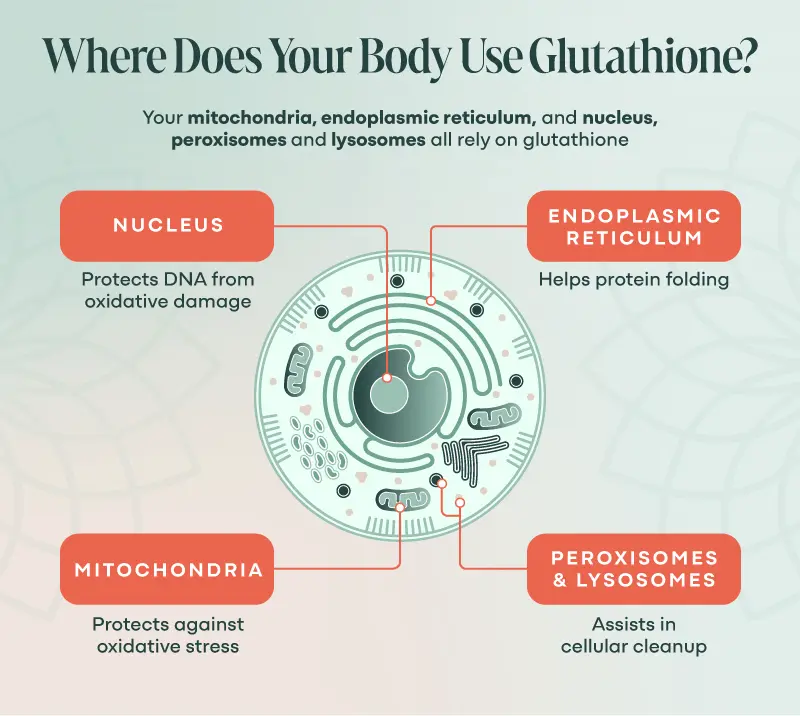
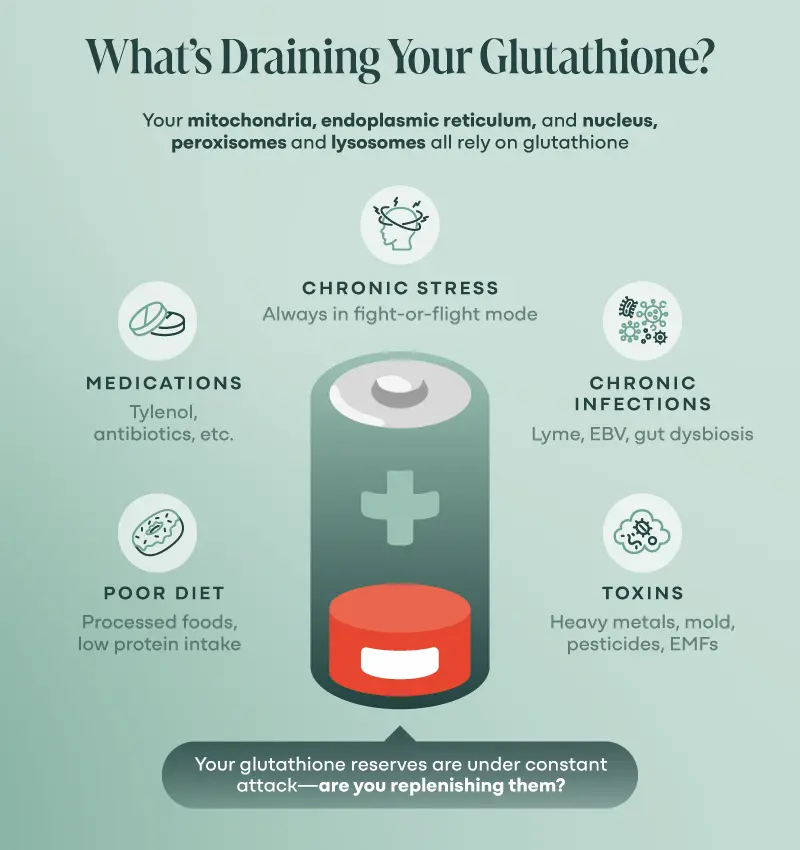
Your mitochondria, endoplasmic reticulum, and nucleus, peroxisomes, and lysosomes all rely on glutathione (17, 19, 20). Let’s take a look!
Where Is Glutathione Used?
Mitochondria
Mitochondria are your cellular power plants—the little engines that burn fuel to make ATP, the energy currency of your body.
But this energy production isn’t clean.
It creates byproducts called reactive oxygen species (ROS) and Reactive Nitrogen Species (RNS), causing oxidative stress.
Too much ROS/RNS and your mitochondria start to break down, which means your energy tanks, detox slows to a crawl, and you’re left feeling like you’re dragging yourself through wet cement.
This is where glutathione steps in.
Your cells actively shuttle about 15% of your glutathione into the mitochondria (19) using specialized transporter proteins (looking at you, dicarboxylate and 2-oxoglutarate carriers).
Once inside, glutathione neutralizes ROS and RNS, protects mitochondrial membranes, and keeps your energy system online (17).
Without enough glutathione in the mitochondria?
Expect fatigue, brain fog, poor detox, and accelerated cellular aging.
It’s basically bioenergetic burnout.
Endoplasmic Reticulum
The endoplasmic reticulum (ER) is another glutathione-hungry organelle (19).
This is where your body assembles proteins, which is a “redox-heavy” process—meaning it creates oxidative stress as a byproduct.
Glutathione helps balance the ER’s oxidative environment so proteins fold correctly.
If glutathione levels drop, protein folding goes sideways.
Misfolded proteins accumulate, and your immune system flags them as threats, triggering inflammation or even autoimmune responses.
So, if you’re reacting to every meal or your body seems to be turning on itself, ER stress and glutathione depletion may be part of the picture.
The Nucleus
The nucleus, which stores your DNA, doesn’t use as much glutathione, but when toxins hit, it counts on glutathione to protect your genetic material from oxidative damage (19, 21).
Low glutathione here means more DNA mutations—especially in the presence of environmental toxins like benzene or heavy metals.
Peroxisomes and Lysosomes
Finally, we’ve got the peroxisomes and lysosomes—your cellular garbage crew.
These organelles help metabolize fats, clean up cellular debris, and break down damaged cell parts.
But the cleanup process itself generates oxidative stress.
Glutathione helps neutralize this oxidative byproduct, so the cell doesn’t poison itself while trying to tidy up.
Without enough glutathione, the cleanup gets messy—think inflammation, lipid peroxidation, and more cellular chaos.
So no, glutathione isn’t just “a good antioxidant.” It’s the molecular backbone of your entire cellular housekeeping system.
Types of Glutathione
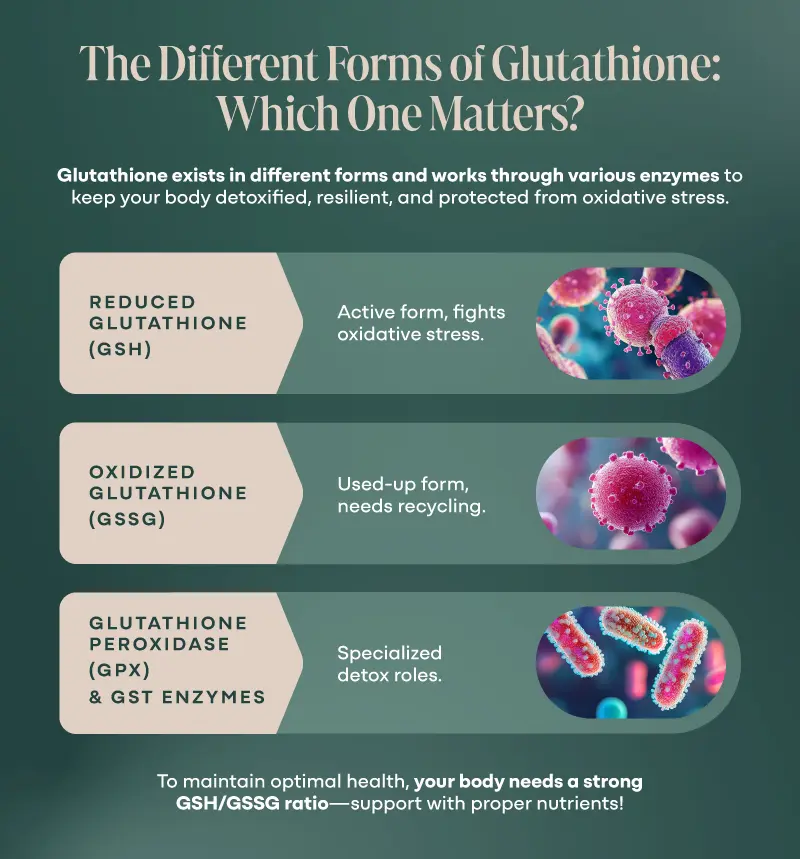
Glutathione exists in different forms and works through various enzymes to keep your body detoxified, resilient, and protected from oxidative stress.
Understanding the different types of glutathione and how they function can help you make better decisions about how to support your health naturally.
Reduced Glutathione (GSH) – The Active Form
Reduced glutathione (GSH) is the bioavailable, active form of glutathione—the one that does the heavy lifting inside your cells.
It’s your front-line defense against free radicals, responsible for neutralizing oxidative damage before it wrecks your mitochondria, cell membranes, or DNA.
GSH also plays a crucial role in recycling other antioxidants like vitamin C and E, and it powers your detox pathways, especially in the liver, where it’s used to bind and escort toxins out of the body (4, 20, 27, 29).
Your body is constantly working to maintain a healthy ratio between reduced glutathione (GSH) and its used-up form, oxidized glutathione (GSSG) (17).
Through enzymes like glutathione reductase, GSSG is recycled back into GSH so the system can keep humming (17).
But when your GSH levels drop—whether from toxin overload, chronic infections, nutrient deficiencies, or just straight-up stress—oxidative stress starts to climb, and symptoms kick in.
In fact, low glutathione is one of the earliest biochemical issues found in people with Parkinson’s Disease (19, 32).
Low glutathione has also been linked to anxiety, depression, anhedonia, and other stress-related issues (6).
Maintaining your GSH pool isn’t optional; it’s foundational.
Oxidized Glutathione (GSSG) – The Used-Up Form
When glutathione (GSH) does its job—neutralizing oxidative stress like a molecular firefighter—it doesn’t walk away unscathed.
It gets oxidized in the process and turns into GSSG, the “used up” version.
Your body is supposed to recycle that oxidized glutathione back into its active form using a little enzyme-powered magic fueled by NADPH (17). (Think of NADPH as cellular rocket fuel—it powers regeneration and repair on a deep, molecular level.)
At any point in time, a healthy body under normal conditions has less than 5% of their glutathione as GSSG (19).
But if you’re dealing with chronic infections, mold, heavy metals, or you’ve been nutritionally starved by a lifetime of processed food and “low-fat” everything, that recycling system breaks down (8, 15).
GSSG builds up.
GSH drops.
And suddenly, you’re in full-blown oxidative stress mode.
This is when your body starts having a really hard time keeping up with repairs—cell membranes degrade, inflammation rises, and detox pathways get jammed.
You feel it as fatigue that sleep doesn’t fix, chemical sensitivity, histamine issues, or a total crash after doing something mildly ambitious—like grocery shopping.
This isn’t a motivation problem.
It’s a redox imbalance (19).
And most doctors?
Still haven’t gotten the memo.
Glutathione Peroxidase (GPx) – Your Anti-Inflammation Defense
Glutathione peroxidase (GPx) is an enzyme that relies on selenium to do its job, and its job is crucial (17).
(Well, actually, there are eight GPxs, with GPx1 being the dominant form.) (17)
It uses glutathione to neutralize hydrogen peroxide and lipid peroxides (aka the inflammatory wreckage that builds up when your cells are under attack).
Without GPx doing cleanup, oxidative stress builds fast—especially in your brain, heart, and immune system.
Here’s the catch: if you’re low in selenium—and most people with chronic symptoms are—GPx can’t function.
Low selenium = low GPx activity = more inflammation, more tissue damage, and more “mystery” symptoms that don’t respond to standard care.
GPx is especially important for preventing neurodegeneration, cardiovascular issues, and autoimmune flares.
Your brain has a high demand for oxygen and polyunsaturated fatty acids, and this makes it vulnerable to oxidative stress (17).
The highest concentrations of glutathione in the brain are found in the cortex, hypothalamus, cerebellum, striatum, and substantia nigra – but the actual detoxification of harmful substances takes place in the kidneys (17, 32).
A 2021 study found that glutathione levels in the substantia nigra are 60% lower in people with Parkinson’s (3).
So, if you’ve got brain fog, joint pain, or you’re constantly inflamed no matter what diet you try, optimizing selenium and supporting GPx should be at the top of your list—not buried in some footnote of a generic detox protocol.
Glutathione-S-Transferase (GST) – The Detox Workhorse
There’s a family of enzymes in your body called glutathione S-transferases (GSTs), and if you’ve been dealing with mold toxicity, heavy metals, or weird chemical reactions that make you feel like you’re living in a sci-fi movie—pay attention.
GST enzymes are responsible for taking toxins, binding them to glutathione, and converting them into a form your body can eliminate through urine or bile (23).
No GST activity?
No exit strategy.
Some people have genetic polymorphisms in their GST genes (like GSTM1 or GSTT1) that mean their detox system is running at partial power—or not at all, and this is associated with neurological diseases such as Parkinson’s (23).
This doesn’t show up on routine labs, but it absolutely shows up in your body.
(And don’t worry, you aren’t doomed. You just need to ramp up your support of these enzymes!)
If toxins start to pile up faster than you can clear them, that’s when the inflammation, fatigue, and weird symptoms kick in.
GSTs are especially critical for clearing out pesticides (33), pharmaceutical residues, heavy metals, and all the other delightful things we’re constantly exposed to just by breathing air, drinking water, or—you know—living on Earth.
What else does glutathione do?

Role of Glutathione (AKA Benefits of Glutathione)
You may be thinking you have a good handle on what glutathione does in your body, and by extension, just how critical it is.
But you know me, no article is complete without scouring the research to learn more.
Here’s a more complete picture of what glutathione is up to:
- Activation of T Cells (17, 22)
- Aids natural programmed cell death such as apoptosis and ferroptosis (4, 17, 18)
- Assists in protein folding (4)
- Cell cycle regulation (4, 12, 17, 22)
- Chelation of mercury (20)
- Cytokine production (17, 22)
- Decreases oxidative stress and inflammation (1, 3, 4, 5, 6, 7, 10, 12, 14, 15, 16, 17, 18, 19, 20, 21, 22, 23, 24, 26, 29, 32)
- Detoxification of xenobiotics, hydrogen peroxide, and/or lipid peroxides (4, 12, 15, 17, 18, 19, 23, 32)
- Enhances Natural Killer cell function (20, 22)
- Helps to restore the gut microbiome (11)
- Immune system regulation (7, 12, 17, 20, 22)
- Improves antibiotic efficacy (22)
- Improves macrophage antimicrobial action (20, 22)
- Interacts with heavy metals such as lead, mercury (15)
- Maintains cellular redox balance (4, 12, 15, 17, 18, 19, 20, 22, 26, 29, 32)
- Modulates cellular signaling pathways (18, 22, 23, 29)
- Neuroprotective (3, 6, 15, 17, 23, 24, 32)
- Promotes balance between regulatory T cells and effector T cells (22)
- Proper function of antigen-presenting cells (20, 22)
- Protects against kidney disease and nephropathies (1)
- Protects against oxidative stress damage from mycotoxins such as zearalenone (10)
- Protects proteins from cross-linking (4, 12)
- Regenerates other antioxidants (vitamin c, vitamin e) (4, 20, 27, 29)
- Regulates gene expression and protein functions (18, 19)
- Regulates metal (iron, copper) homeostasis (17)
- Regulates neurotransmitter release (17)
- The most important antioxidant in the eye (7)
Whoa! Who knew this amazing molecule did so many important things!
What happens when your glutathione is low?
Symptoms of Low Glutathione: How to Know If You’re Running on Empty
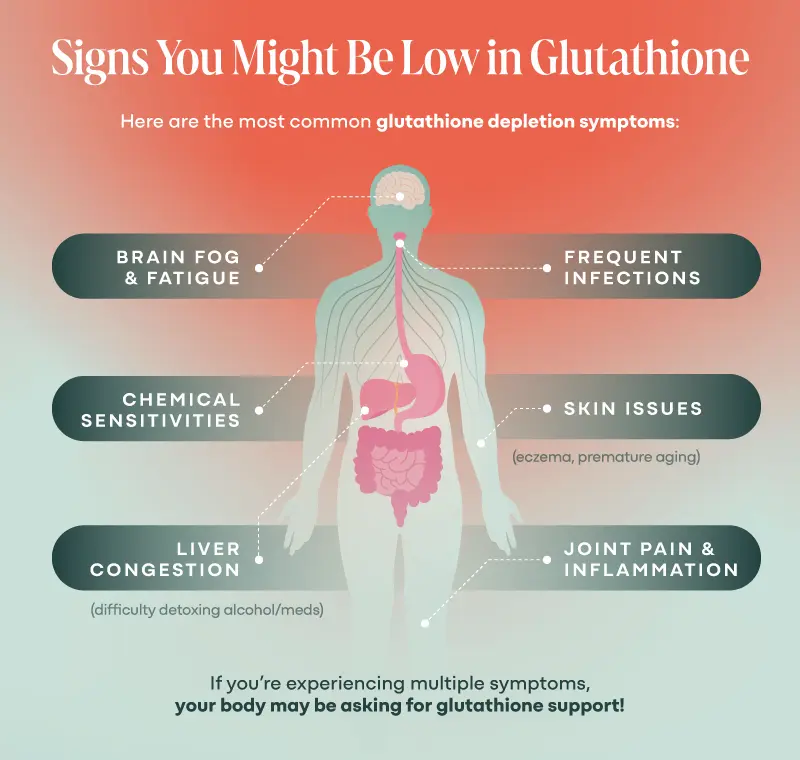
When GSH is depleted, toxins build up, oxidative stress skyrockets, and your body starts throwing symptoms at you.
Here are the most common glutathione depletion symptoms:
- Brain fog and chronic fatigue – You can’t think clearly, and no amount of rest helps.
- Frequent infections – Your immune system is running on fumes.
- Chemical sensitivities – Perfumes, exhaust fumes, and synthetic chemicals trigger intense reactions.
- Skin issues – Think eczema, rashes, and premature aging.
- Liver congestion – If one glass of wine makes you feel hungover for days, your detox pathways are struggling.
- Joint pain and inflammation – Your body can’t control oxidative stress, so inflammation takes over.
Sound familiar?
You’re not alone.
Most people are unknowingly walking around with suboptimal glutathione levels, wondering why they never feel quite right.
What’s Draining Your Glutathione?
Your body is constantly using glutathione to neutralize toxins and manage oxidative stress.
But what happens when the demand outweighs the supply?
Depletion. And with depletion comes a cascade of health issues you can’t afford to ignore.
Here are some of the biggest glutathione killers:
- Chronic Stress: Your body burns through glutathione trying to manage the damage caused by prolonged cortisol spikes. If you’re always in fight-or-flight mode, you’re draining your reserves fast.
- Toxin Overload: Heavy metals, pesticides, mold, glyphosate, EMFs, and environmental pollutants all force your body to use up glutathione at an alarming rate.
- Poor Diet: Processed food, sugar, and bad fats don’t just fail to support glutathione production; they actively work against it.
- Chronic Infections: Lyme, Epstein-Barr virus (EBV), and hidden infections drain glutathione while ramping up systemic inflammation.
- Overtraining or Inactivity: Either extreme puts a strain on your body, leading to faster depletion.
- Medications: Common drugs like acetaminophen (Tylenol) are notorious for depleting glutathione, leaving your liver struggling to keep up.
As you can see, today’s world is filled with glutathione-depleters.
But you can refill your glutathione tanks!
Glutathione Supplementation (How Do You Take Glutathione?)
Here’s the part no one tells you when they sell you a $90 bottle of glutathione capsules: most oral glutathione supplements are garbage.
They get broken down in your stomach before they ever reach your cells, which makes them about as useful as a wet match in a rainstorm (29).
And glutathione IVs? They cause even more problems than they solve.
IV Glutathione – Why It Can Backfire
Intravenous glutathione might sound like the holy grail—straight into your bloodstream, no digestion, instant support.
And yes, it can be powerful… but also reckless if your system isn’t ready for it.
See, IV glutathione doesn’t just support detox—it mobilizes toxins.
Fast.
The problem?
It doesn’t bind them.
If your liver, bile, kidneys, and gut aren’t primed to escort those toxins out, they just recirculate and settle somewhere else—often in more sensitive tissues like your brain.
This is why so many people crash after IV glutathione.
You feel good for a hot second, then boom: migraine, fatigue, anxiety spike, or a flare-up of whatever mystery illness you’re working through.
That’s not healing—that’s redistribution.
If your detox pathways aren’t fully supported (think: bile flow, binders, antioxidant reserves, lymph movement), IV glutathione can backfire hard.
So, it may have a narrow place—but only when your body’s ready to finish the job.
Otherwise, it’s like flushing a toilet with no plumbing.
Which Form of Glutathione Should You Focus On?
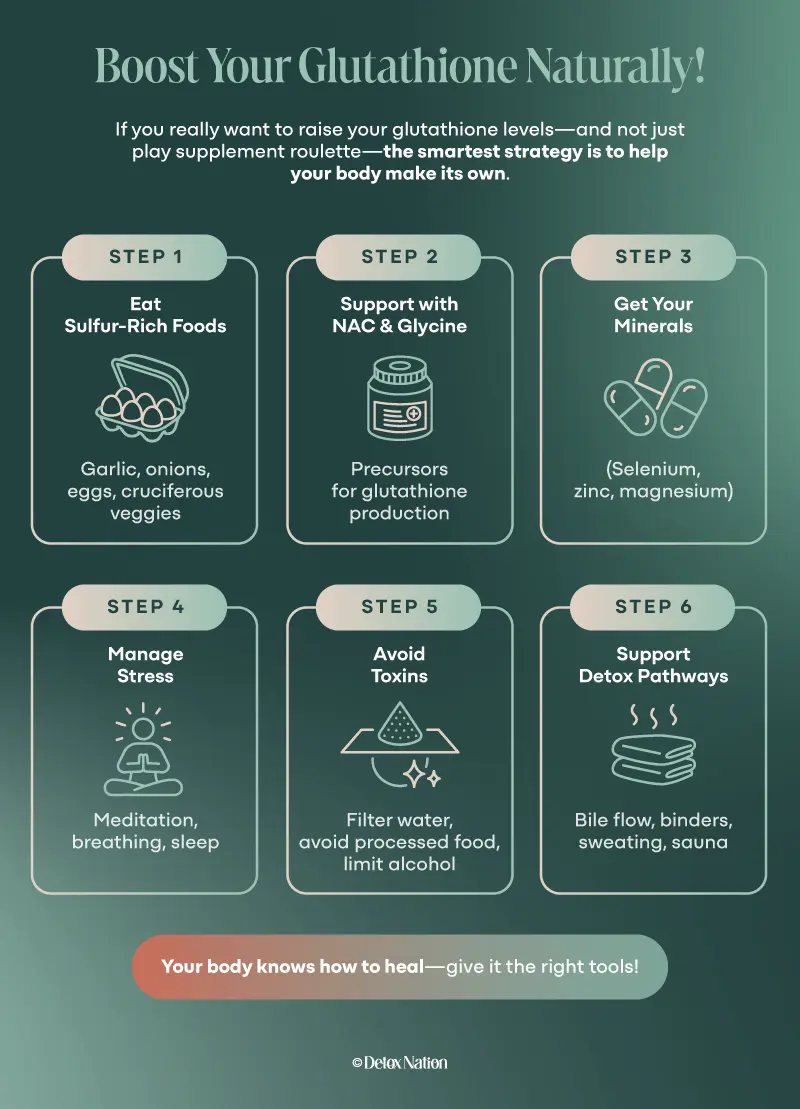
If you really want to raise your glutathione levels—and not just play supplement roulette—the smartest strategy is to help your body make its own.
Trying to shortcut the process with direct glutathione supplements usually backfires (or gets expensive fast).
What works is giving your body the raw materials and cofactors it needs to do the job right, from the inside out.
Start with Augmented NAC—this gives you the all-star precursor N-acetylcysteine, which feeds directly into glutathione production (21, 28, 29, 33).

NAC isn’t an antioxidant itself, but it shines when helping deficient cells to replenish glutathione (3, 5, 9, 13, 16, 28, 29).
It also helps to modulate the immune system (2).
And it’s even been shown to protect cells that have been exposed to glyphosate (33)!
Glutaryl is another game-changer—it’s a targeted formula that supports not just glutathione production, but also detox pathways and cellular energy, so your cells don’t burn out mid-cleanup.

Then there are your essentials: selenium, zinc, and magnesium—these minerals act as critical cofactors, powering the enzymes that keep the glutathione cycle running.


L-cysteine and Vitamin D can also upregulate GSH and downregulate oxidative stress (14, 21).
And let’s not forget your plate: sulfur-rich foods like garlic, onions, and cruciferous veggies aren’t just good for you—they’re raw materials your body uses to build glutathione.
If you’re serious about supporting your glutathione system (and avoiding a detox crash), you’ve got to think beyond pills.
Two of the most underrated tools?
Light therapy and castor oil packs.

Both are simple, affordable, and ridiculously effective at supporting liver function.
Red and near-infrared light therapy can stimulate mitochondrial activity in the liver, boosting energy production and helping your detox pathways move.
Meanwhile, castor oil packs work like a gentle nudge to your lymphatic system and liver, reducing inflammation and encouraging bile flow—key for binding and removing toxins instead of just stirring them up.
These aren’t woo-woo hacks; they’re practical, bioregulatory tools that make everything your supplements are trying to do work better.
You don’t need more gimmicks—you need to work with your biology.
Own Your Health: The Power of Rebuilding from the Inside Out
If you’ve been trying to detox without building up your glutathione system first, it’s like trying to clean a flooded basement with a sponge.
Glutathione is what allows your body to handle detox in the first place—without it, you’re just stirring up toxins and hoping for the best.
The path forward isn’t about heroic protocols or extreme measures—it’s about getting smart with your strategy.
Supporting glutathione from every angle is foundational biochemistry: precursors, cofactors, mitochondrial health, and gentle liver support.
When you get this piece right, your system stops screaming and finally starts to heal.
Take charge today by giving your body the tools it needs. Augmented NAC and Glutaryl are two of the most effective ways to naturally increase glutathione levels without the crash.
FAQ: Your Glutathione Questions Answered
Q: Glutathione, does it work?
A: Absolutely—when supported correctly. It’s used by every cell in the body. Your body relies on glutathione to detox, heal, and protect itself. But IVs and direct supplementation aren’t always the best approach. Focus on precursors like Augmented NAC and Glutaryl for sustainable results.
Q: What are the main glutathione benefits?
A: Glutathione is a powerful antioxidant that can protect the body. Potential health benefits of glutathione include increased energy, better detox, stronger immunity, reduced inflammation, and improved brain function.
Q: What conditions are associated with glutathione deficiency?
A: Neurodegenerative disease, cardiovascular disease, lung disease, liver disease, immune disorders, increased inflammation, and general aging (20, 22, 29).
Q: Can I just take a glutathione supplement to increase low levels of glutathione?
A: Oral glutathione is poorly absorbed. Your best bet is to take precursors that help your body produce it naturally.
Q. What is S-Acetyl Glutathione?
Unlike standard oral glutathione, this version bypasses the digestive gauntlet and slips into your cells more efficiently, helping to raise intracellular GSH levels. It’s still not as effective long-term as precursors, but it can be helpful in short-term recovery protocols—especially if your system is tanked and you need a leg up while rebuilding.
Q. What About Liposomal Glutathione?
Liposomal glutathione is a step up from the standard stuff—these formulations wrap glutathione in little fat bubbles (phospholipids) to help it survive the digestive tract and actually get absorbed (31). L-GSH crosses the blood-brain-barrier (3). But even liposomal glutathione doesn’t hold a candle to giving your body the raw materials it needs to make its own supply—like NAC, glycine, and the proper cofactors.
If you’re going to invest in liposomal glutathione, make sure it’s using reduced glutathione, it’s third-party tested, and ideally, it’s paired with a protocol that supports your glutathione recycling system. Otherwise, you’re just upgrading your expensive urine.
Q. What impact do heavy metals have on glutathione?
A 2024 study stated, “The detrimental impacts of heavy metals of human health are largely linked to their capacity to interfere with antioxidant defense mechanisms, primarily through their interaction with intracellular glutathione…” (15) The article discussed the interactions of glutathione with metals such as aluminum, mercury, cadmium, arsenic, and lead.
Take charge today by giving your body the tools it needs.
Augmented NAC and Glutaryl are two of the most effective ways to naturally increase glutathione levels without the crash.
Shop Now