
Your head feels heavy.ย
Thereโs a dull, constant pressure in your sinuses.
And letโs not even talk about theย morning sludgeย you blow into tissues.
Maybe youโve been told itโs โjust allergiesโ or โseasonal sinusitis.โ Maybe youโve had rounds of antibiotics, steroids, or even sinus surgery, only to end up right back where you started.
If youโve ever walked into a room andย feltย your face swell up, or caught a whiff of that musty, earthy smell that makes your whole body tense, this article is for you.
Because sinus issues that wonโt quit are not random. Theyโre not just โyour genetics.โย
They could beย mold. Specifically,ย black mold, and the toxic little tricks it plays on your sinuses, your immune system, and your sanity.
Letโs break it down so you can start breathingโand thinkingโclearly again.
Key Takeaways
- If your sinus symptoms wonโt quit, donโt blame โseasonal allergies.โ
- Black mold likeย Stachybotrys chartarumย is chemically aggressive.
- Standard treatments often fall short, but you can detox and recover.
What Counts as โBlack Moldโ?
โBlack moldโ isnโt a scientific term; itโs a catchall label for a group of dark-pigmented molds that tend to show up after water damage and excessive humidity (1, 3, 13).ย
Theyโre often toxic, and they love to set up shop in your walls, carpets, ceilings, and your body.
The most infamous of the bunch isย Stachybotrys chartarum, but itโs not the only culprit. Other dark molds that fall under this umbrella include:
- Cladosporiumย โ Often found on damp wood and textiles.
- Alternariaย โ Common in bathrooms and window frames.
- Aspergillus nigerย โ Loves dust, HVAC systems, and sneaky indoor corners.
- Chaetomiumย โ Usually hangs out on drywall and wood.
- Ulocladiumย โ Thrives anywhere water damage lingers.
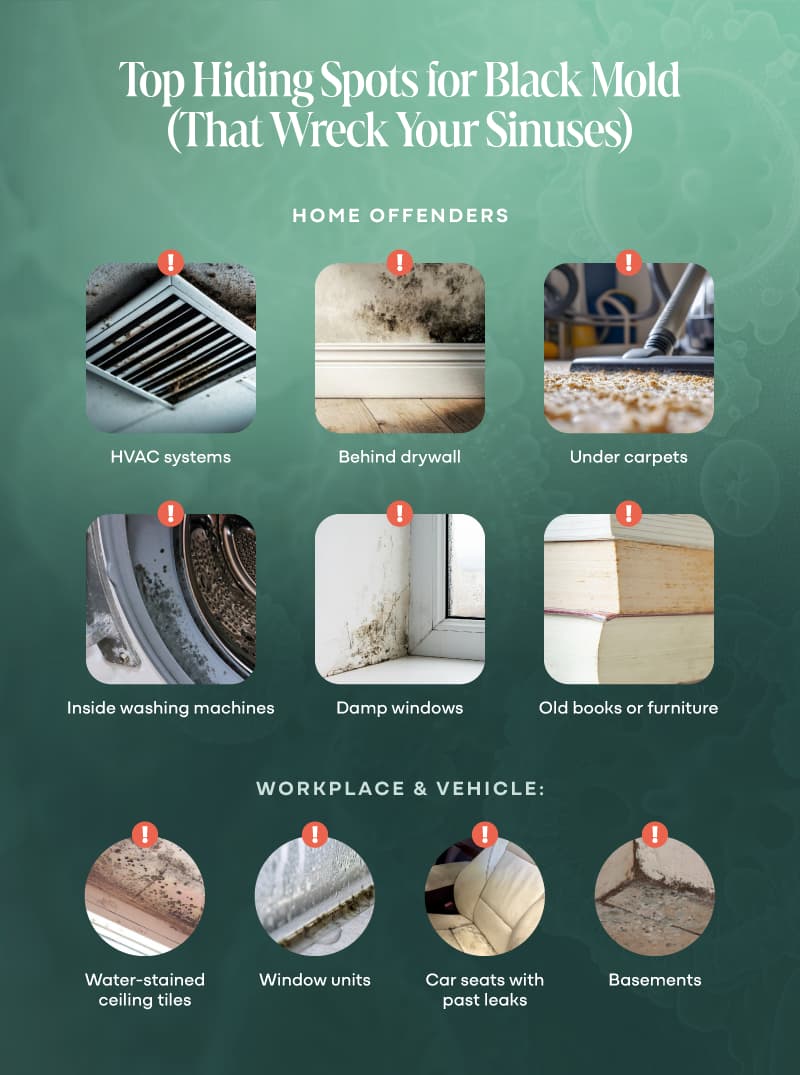
Black mold can lurk behind walls, under floors, or in your air ducts (1, 3, 4, 16, 20).ย
It doesnโt always smell, it doesnโt always look scary, and you wonโt always see it, but it can still produce toxins that drift through your air and land in your upper airways like microscopic poison darts (8, 9, 17, 19, 20).
Your house (or workplace, or car) can look clean, but still quietly gaslight your immune system through the vents.
If your sinus issues got worse after a roof leak, a basement flood, or a long stay in a โcharmingโ Airbnb with questionable AC, you might be living with more than just dust.
Meet Stachybotrys: The Slow-Growing Mold That Packs a Toxic Punch
Stachybotrys chartarum is theย poster childย of toxic mold. Itโs the one that shows up in lawsuits, documentaries, and late-night Google rabbit holes.ย
But this moldโs PR is pretty accurate:ย itโs slow to grow, sneaky to detect, and ridiculously toxic.
Unlike molds that pop up on your shower curtain in a day,ย Stachybotrys needs consistent moistureย to thrive (1, 3)โthink roof leaks, damp drywall, hidden plumbing drips, or a post-flood renovation that never fully dried out (1, 3, 4, 5, 8, 9, 16, 19, 20).ย
You can even find it in culinary herbs (20) and foods (8, 9, 10).
It doesnโt love open air, which is why it sets up camp insideย your walls, behind wallpaper, or underneath floorboards, where it can stew in peace.
Stachybotrys has been shown to inactivate competing fungal species on water-damaged building materials (6). This means it can dominate less-toxic competitors to become โking of the hill.โ
Stachybotrys has two distinct chemical โpersonalitiesโ depending on the strain:
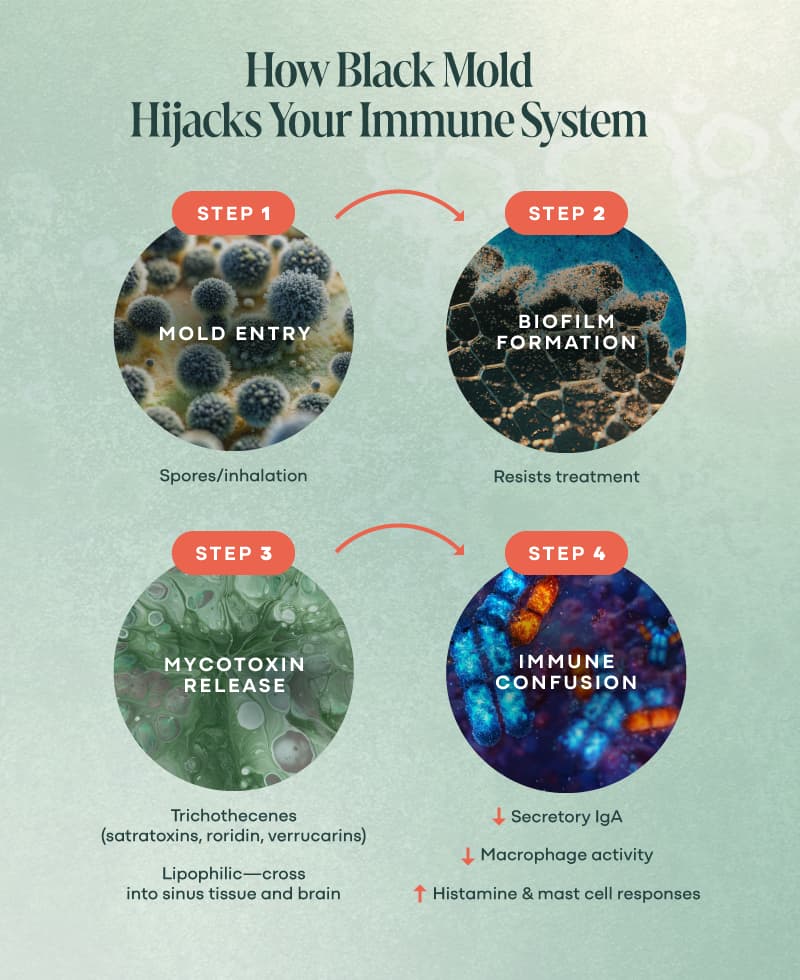
- Trichothecene-producing types (the worst ones) release satratoxins, roridin, and verrucarinsโpotent mycotoxins that damage cells on contact (4, 5, 9, 13, 14, 16, 17, 20).
- Atranone-producing typesย produce different compounds that can still inflame your airways but arenโt as deeply researched (6).
How We Can Help
Youโre not doomed to live on decongestants and false hope forever. Start with the Mold Toxicity Quiz to begin connecting your symptoms to what might be lurking in your environment.
Take the QuizUnlike molds that love to fly around,ย Stachybotrys spores are sticky and heavy (6).ย
They donโt go airborne easily, so air testing or cultures often miss them, especially if youโre not actively disturbing the colony (6).ย
Meanwhile,ย tiny fragments and mycotoxinsย doย go airborne, and they can slip into your sinuses, lungs, and bloodstream without ever showing up on a mold test (2).
The number of fungal hyphae and fragments can be 500 times higher than the spore count, and the deposition of these fragments in your airways can be over 200 times higher than spore deposition (2).
Stachybotrys is slow and quiet, and incredibly destructive.ย Especially when your sinuses are already dealing with pollen, pollution, and an immune system thatโs flat-out tired.
Stachybotrys Mycotoxins 101: Why Your Sinuses Canโt Catch a Break
Hereโs where black mold stops being a building issue and starts being aย biochemical nightmare, especially for your sinuses.
Because Stachybotrys isnโt just growing in the walls, itโsย leaking molecular sabotage into your air.
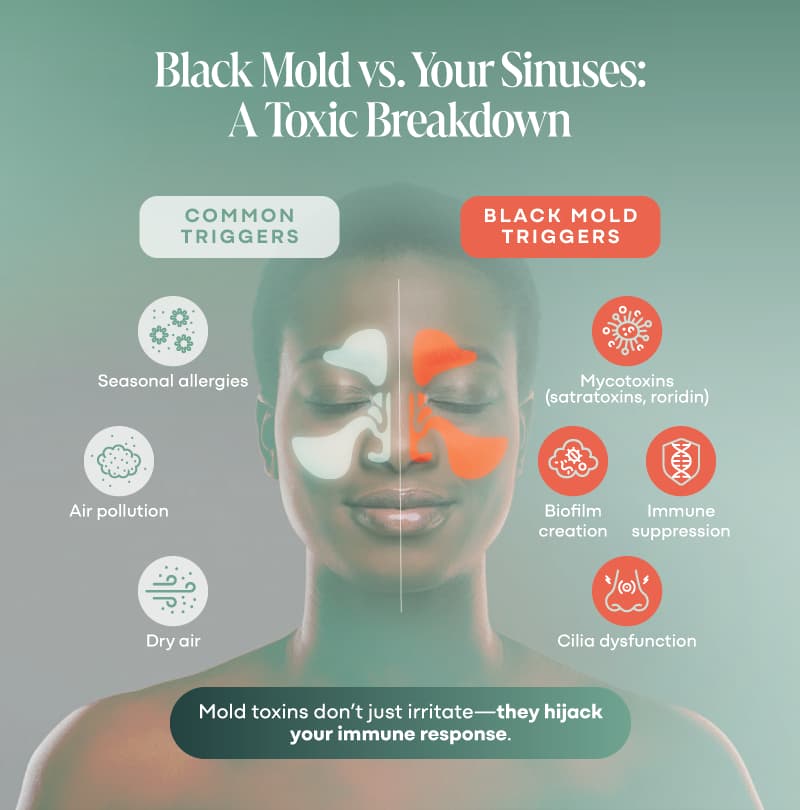
The worst offenders are a group of compounds calledย trichothecenes, particularlyย satratoxins G and H. These arenโt your average irritants. These areย protein synthesis inhibitors, which is a fancy way of saying they tell your cells to stop functioning normally (4, 14, 9, 16, 20).
Some quick facts that should make your eyebrows go up:
- Satratoxins areย cytotoxicย (they kill cells) (9, 12, 16, 20).
- Lipopolysaccharides (produced by gram-negative gut bacteria) increase the toxicity of roridin A and satratoxin G (19).
- The macrocyclic trichothecenes are a hundred times more potent than another researched mycotoxin, deoxynivalenol (4, 9).
- Furthermore, the trichothecenes can directly interact with cellular components without requiring metabolic activity first (14).
- Some scientists consider them to be more toxic than pesticides (8).
- Theyโreย lipophilic, meaning they dissolve into fats and cross cell membranes, including those in your sinuses and brain.
- Theyโve been shown in studies to causeย nosebleeds, mucosal irritation, inflammation (4, 7, 9, 16), and immune suppression (12, 14), especially with chronic exposure through inhalation (8, 9, 17, 19, 20).
In animal studies, inhaled satratoxins from Stachybotrys caused massive inflammation in the nasal passages and destruction of the olfactory epithelium, tract, and bulbs (aka the part of your nose that helps you smell) in just a few days (4, 19).
Let that sink in: this stuff doesnโt need months to do damage. It just needs access.
Sinceย Stachybotrys spores are heavy, they donโt travel far on their own (6). Butย tiny, inhalable fragments coated in these mycotoxins absolutelyย doย floatโand they love to settle right in your upper airways (2).
The result is that your sinuses stay swollen, raw, and confused, your immune system gets the signal to โstand downโ just when it needs to rally, and every breath becomes a microdose of poison.
But hereโs the good news: Your bodyย canย get rid of these toxinsโonce you stop the exposure and support the right detox pathways. (Weโll get there soon.)
Letโs break down exactly how black mold impacts your sinuses.
How Black Mold Disrupts Your Sinuses
Your sinuses are part of your immune system’s frontline defense.ย
Lined with mucosa, filled with immune cells, and designed to filter, drain, and defend, theyโre usually pretty great at their jobโunless theyโre under constant attack from mold fragments, mycotoxins, and a confused immune system. Letโs look at how that plays out.
Mold Colonization & Biofilm
When you inhale mold spores, they land on your mucosal lining, and if your immune system is overwhelmed, they set up shop and build aย biofilm.ย
A biofilm is a slimy, protective matrix that shields the mold spores from antifungals, antibiotics, and even immune cells. Inside, they canย reproduce, release toxins, and invite other pathogens to join the party.
Immune Confusion & Suppression
Mycotoxins confuse your immune system.
Stachybotrys toxins suppress key players like macrophages and neutrophilsโthe very cells that are supposed to eat up invaders (12, 14). They also decreaseย secretory IgA, your first line of defense in the mucosa.
Now youโre inflamedย andย immunocompromised at the same time.
This causes your immune system to swing between overreacting (allergies, histamine surges, mast cell freakouts) and under-reacting (letting pathogens move in unchecked). Sound familiar?
Inflammation & Drainage Dysfunction
When youโre inflamed, swollen tissue narrows your drainage pathways, cilia (tiny hair-like structures that move mucus along) slow down or stop, and mucus thickens. This creates a warm, moist environment where mold, bacteria, and viruses thrive.
If your body is a garden, this is where the weeds take over and the sprinkler breaks.
MARCoNS & Co-Infections: Moldโs Favorite Sidekicks
One of the most common findings in mold-exposed folks is MARCoNSโMultiple Antibiotic-Resistant Coagulase-Negative Staph (21, 22).
These bacteria can live in mold-induced biofilms and are notoriously hard to eradicate.
They release their own biotoxins, worsening inflammation and suppressing the immune response even more.
Systemic Ripple Effects: It Doesnโt Stay in Your Nose
Once inhaled,ย mycotoxins can enter your bloodstream, triggering systemic issues:
- Chronic cough (5, 16)
- Drippy nose (5, 16)
- Constant low-grade headache (5, 16)
- Increased asthma symptoms (16)
- Sinusitis (18)
- Brain fog and memory loss (5)
- Eye irritation, including itching, stinging, redness, etc. (5)
- Mood swings and anxiety (5)
- Gut dysfunction as well as nausea and vomiting (5)
- Fatigue so deep it feels cellular (5)
In other words, the mold in your sinuses might be the missing link behind your โmystery symptoms.โ
Symptoms of Black Mold Sinus Involvement
Sinus mold creeps in slowly. Quietly. Confusingly. Until one day you realize that the โseasonal allergiesโ youโve had for 18 months are starting to feel more like a full-time job.
Hereโs what to watch for if mold has taken up residence in your sinuses:
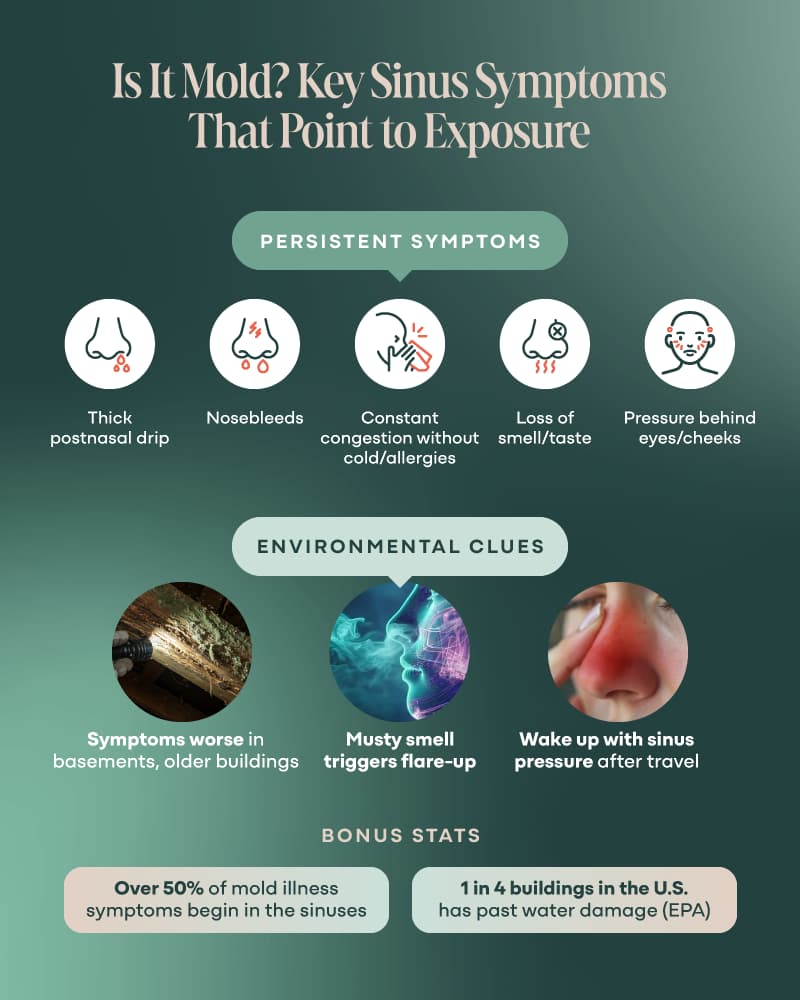
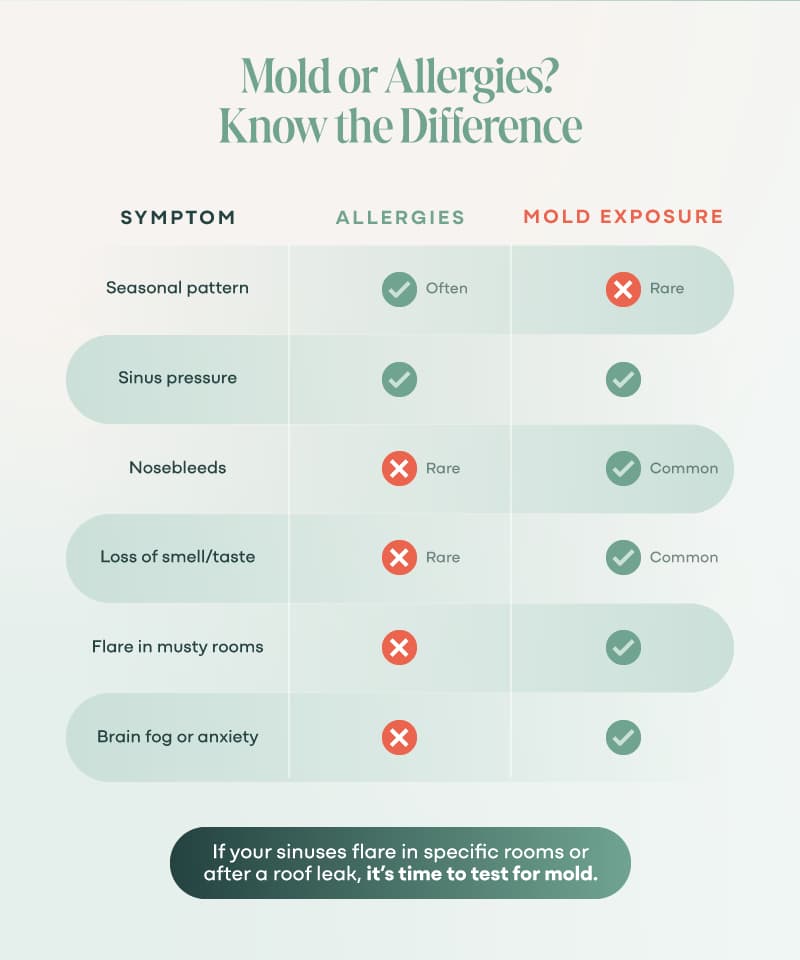
Sinus-Specific Symptoms
These show up in your face and head first:
- Chronic nasal congestion, even without a cold or pollen in sight
- Postnasal drip thatโs thick, sticky, or has a weird metallic smell
- Pressure or pain around your eyes, cheekbones, or forehead that wonโt quit
- Frequent sinus infections or sinusย painย without infection
- Nosebleeds, especially in dry environments or older buildings
- Loss of smell or tasteโsometimes suddenly, sometimes gradually
- Sneezing โfitsโ or marathons
Symptoms That Flare in Specific Environments
Mold-exposed sinuses often โreactโ to contaminated spaces before your brain even registers it:
- You walk into an older home, and your nose swells shut within minutes
- You sleep somewhere new and wake up with a sinus migraine
- You feel sinus pressure or head fuzziness in basements, libraries, water-damaged gyms, etc.
If your face knows a room is moldy before your eyes doโthatโs a clue.
Systemic Clues
Once mold is in your sinuses, its toxins donโt justย stayย there:
- Crushing fatigue, especially after sleeping in a known moldy space (5, 14)
- Neurotoxicity as evidenced by brain fog, memory hiccups, word recall issues (4, 5, 12, 14)
- Heightened sensitivity to smells, lights, or foods
- Histamine overload (sneezing, itching, flushing for โno reasonโ)
- A constant low-grade anxiety or irritability that feels physiological (5)
If youโre seeing multiple symptoms on this listโand especially if theyโve worsened after water damage or moving into a new spaceโitโs time to start asking different questions.
Because if mold is hiding in your sinuses,ย no amount of allergy meds or antibiotics is going to fix it.
Why the Standard ENT Playbook Falls Short
You finally go to the ENT.
They peer up your nose, prescribe a round of antibiotics, maybe hand you a steroid spray, and tell you to irrigate with saline.ย
If youโre lucky, theyโll mention something about chronic rhinosinusitis.
Then, nothing changes. Or worse, it flares back up the moment you stop the meds.
Youโre not imagining it.
The conventional sinus treatment model wasnโt built to recognize mold as a root cause.
And it wasnโt built to handle chronic colonization or mycotoxin exposure.
Hereโs why it usually fails:
- Antibiotics miss the real target. Bacterial infections are often secondary. Mold and its biofilm fortress are the real instigators, but antibiotics donโt touch fungal invaders or break up biofilms.
- Steroids reduce inflammation but suppress immunity. Corticosteroid sprays or oral prednisone can make youย feelย better for a few days, but they come at a cost. They weaken your mucosal immunity even further, allowing mold and bacteria to burrow in deeper. Temporary relief, long-term setback.
- Surgery without detox creates a revolving door. Sinus surgery can widen drainage pathways, but if mold colonization and mycotoxins arenโt addressed systemically, many patients reportย a return of symptoms within months. That shiny post-op CT scan means nothing if your sinuses are still swimming in toxins.
Most doctors arenโt trained to recognize mold as a possible cause, so itโs important to ask questions and look deeper when standard treatments donโt help.
If youโve been seeing ENTs without relief, your sinuses may be reacting to an underlying issue that needs to be addressed at the root, not just managed at the surface.
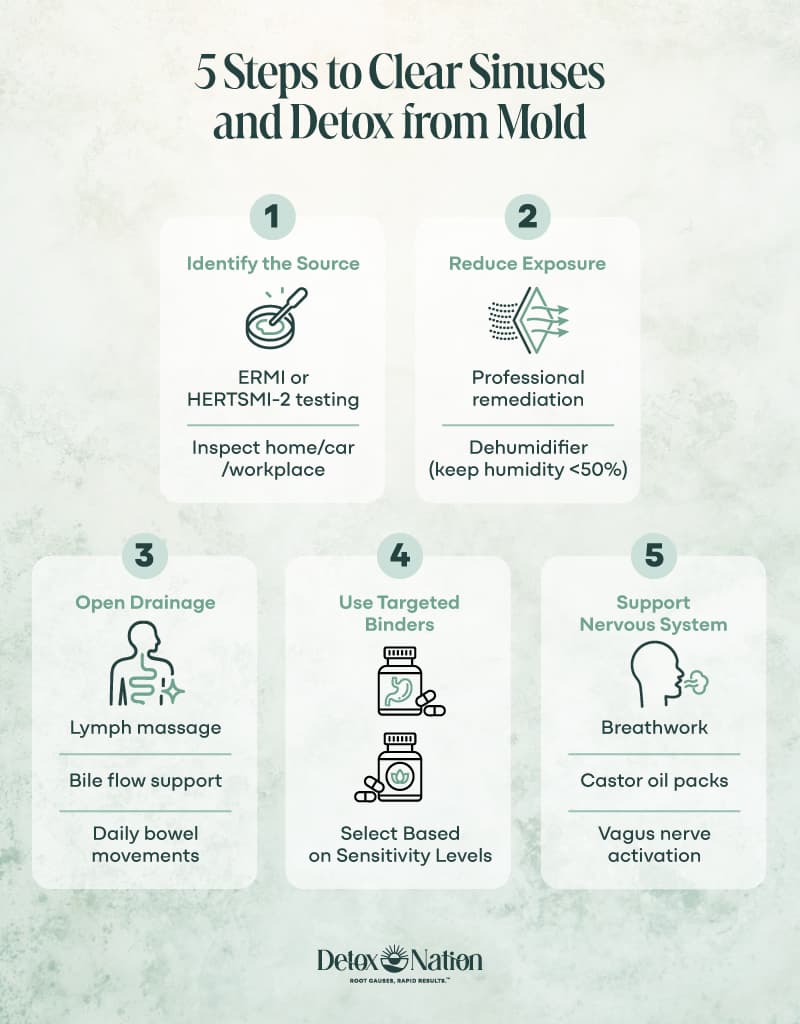
Detoxing Your Way to Clear Sinuses
Letโs be clear:ย you canโt out-supplement or out-spray your way past moldย if youโre still living in it or ignoring your drainage.
But the good news is your bodyย wantsย to heal. It just needs you to get the obstacles out of the way.
Hereโs how to do that without creating a detox reaction that makes you want to throw your neti pot out the window.
Evict the Source
If youโre still living or working in mold exposure, start here:
- Get an ERMI or HERTSMI-2 test from a mold-literate inspector (DIY petri dish kits wonโt cut it).
- Use a quality dehumidifierโmold loves humidity over 50%.
- Remediateย professionally, not with bleach or air fresheners (those make it worse).
Pro tip: If remediation isnโt possible right away,ย start with binders and drainage anywayโyouโll still get symptom relief while you plan your exit strategy.
Open the Drainage Pathways
This part is skipped by almost everyone and itโs why so many detoxes fail.
Your sinuses drain into your gut, lymph, and liver.
If those arenโt flowing, mycotoxins recirculate, and you feel worse.
Start with:
- Gentle lymph movers (such as lymphatic self-massage like โThe Big 6,โ or castor oil packs)
- Bowel regularity (daily movements are non-negotiable)
- Bitters and bile support (artichoke, dandelion, or targeted supplements)
- Nervous system regulationโbecause if youโre stuck in fight-or-flight, detox stalls.
Bind and Eliminate Mycotoxins
Binders act like a cleanup crew, grabbing toxins and escorting them out through bile and stool.
Effective options (depending on the specific mycotoxins):
- Activated charcoal
- Bentonite clay
- Chlorella
- Specific targeted binders
Important:ย these donโt โkill moldโโtheyย bind toxins. And they only work if drainage is open.
Target the Sinuses Directly
Now we deal with the sinus terrain.
Top options:
- Navage rinsesย with distilled water and salt (never tap water, please)
- Antimicrobial nasal spraysย with essential oils or colloidal silver
- Saline sinus rinses with microdoses of the right binders for mold
Clearing mucus helps break down biofilms and restore healthy sinus function.
Regulate Your Nervous System
If your vagus nerve is still in panic mode, your immune system stays confused.
Simple ways to shift into healing:
- Cold exposure (even 30 seconds in the shower)
- Humming or singing
- Gentle breathwork (inhale 4, exhale 6)
- Safe, slow movement like walking or lymphatic rebounding
No parasympathetic state means no deep healing.ย Period.
Track and Adjust
Healing from mold happens in stages. Your body works through different layers over time.
Tools you can use to track:
- Symptom logs (daily or weekly)
- Visual Contrast Sensitivity (VCS) test for neurotoxic load
- Mycotoxin labsโif youโve already opened drainage and want deeper insights
The goal isnโt perfectionโitโs steady progress and balance.
Each time your body releases toxins or breathing starts to feel easier, itโs showing you that healing is happening.
You Deserve to Breathe Freely Again
Black mold and its mycotoxins are sneaky, but theyโre not invincible. With the right information, support, and a nervous system thatโs finally out of crisis mode, your body can clear the mess. Your sinuses can heal. Your brain can come back online. And yesโyou can get your energy, focus, and breath back. Take the free Mold Toxicity Quiz to find out if mold is part of your root-cause puzzle.
Take the QuizFAQs
1. How do I know if mold is causing my sinus issues?
If symptoms flare in certain buildings, linger despite meds, or come with brain fog, fatigue, or weird mucus, mold is worth investigating.
2. Can mold actually live in my sinuses?
Yes. Mold can colonize your sinuses, build biofilms, and release toxins that keep your immune system in chaos.
3. Why didnโt my air quality test show black mold?
Stachybotrys spores are heavy and sticky. Standard air tests often miss them. ERMI or HERTSMI-2 testing is more reliable.
4. I already took antibiotics. Why am I still congested?
Antibiotics donโt kill mold or break down biofilms. And mold often invites antibiotic-resistant bacteria to the party.
5. Does mold affect more than just my nose?
Absolutely. Mycotoxins from mold can impact your brain, gut, hormones, and nervous systemโfar beyond your sinuses.
6. Will detox make me feel worse?
Only if you skip steps. Detoxing without drainage = recirculation = โdetox reactions.โ Always open your pathways first.
7. What if I canโt move or remediate right now?
Start with gentle binders, nervous system support, and opening drainage. You can still make progress while planning next steps.
8. Is it really fixable?
Yes. Your body is brilliant and never forgets how to healโonce you stop the exposure and support the process properly.