
Menopause or Parasites? Why Symptoms Alone May Not Tell You
Fatigue, brain fog, poor sleep, bloating, mood changes, and weight changes are common enough in midlife that almost anything can get blamed on menopause.
Menopause may absolutely be part of the story. But if the gut changes are dramatic, the timing is unusual, or there is a meaningful exposure history, I also want to know what else is happening.
Parasites are one possibility.
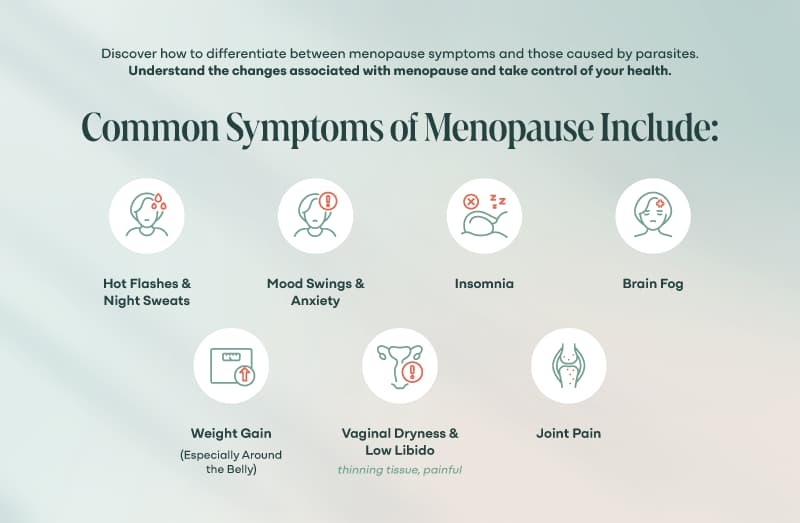
Where the Symptoms Can Overlap
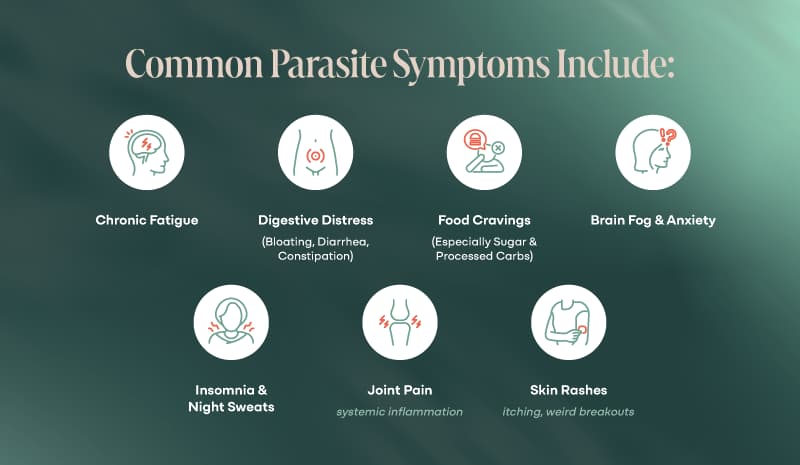
- Fatigue.
- Poor sleep.
- Brain fog.
- Bloating and digestive discomfort.
- Mood changes.
- Joint discomfort.
- Changes in appetite or cravings.
- Changes in weight or abdominal size.
A symptom list cannot reliably separate the two. The timeline and the rest of the health history matter.
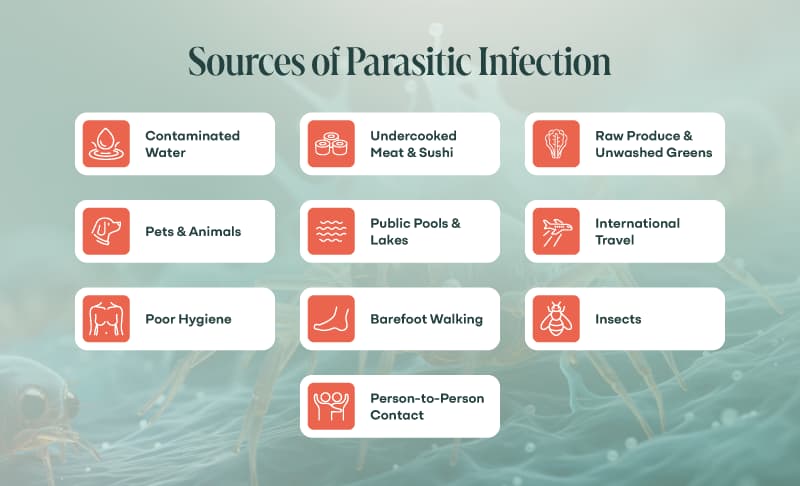
Clues That Make Me Look More Closely at Parasites
- Symptoms changed after travel, food poisoning, untreated water, or a major gastrointestinal infection.
- Diarrhea and constipation alternate unpredictably.
- Bloating is dramatic and fluctuates quickly.
- There is persistent nausea, unusual stool changes, or unexplained digestive disruption.
- Histamine reactions, hives, or other immune symptoms appeared alongside the gut changes.
- The hormonal story does not fully explain the timing or severity of the digestive symptoms.
These clues do not diagnose a parasite. They simply make the question more reasonable to investigate.
Why Midlife Can Expose More Than One Problem
Hormonal shifts can change digestion, sleep, stress resilience, bile flow, and the microbiome. That can make a pre-existing weakness in the terrain more noticeable.
So the most useful frame is often not ‘menopause or parasites?’ It is ‘what changed in my terrain, and what is adding to the load now?’
Ready to take the first step toward feeling better?
Join the Rapid Parasite Release and start reclaiming your energy, digestion, and hormone balance today.
Join Rapid Parasite Release Today!Start With the Foundations
Whether hormones, parasites, or both are involved, we still care about the terrain: bowel regularity, drainage, bile flow, nervous-system regulation, minerals, hydration, sleep, and reducing obvious toxic burden.
That foundation makes deeper parasite work easier to tolerate and gives the body more capacity to respond.
Your Next Step
If the parasite pattern feels familiar, use the site’s current parasite assessment / Rapid Parasite Release CTA. The goal is to investigate intelligently, not to decide from one article that parasites must be the answer.
FAQs: Because You’re Not the Only One Wondering
Q: Can parasites cause menopausal symptoms?
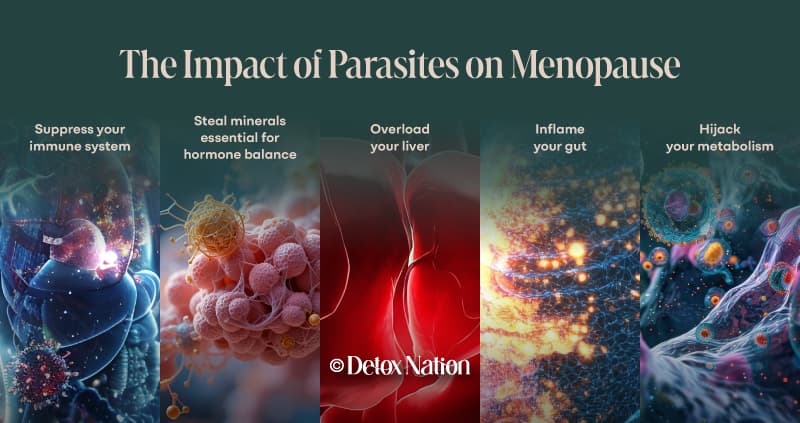
A: While they don’t cause menopause, they can worsen symptoms by draining minerals and inflaming your gut.
Q: What is toxoplasmosis, and can it be a factor?
A: Toxoplasmosis is a parasitic infection often linked to cat feces, but it can also come from contaminated food. It can cause fatigue, brain fog, and immune dysfunction—issues that mimic menopause symptoms.
Q: Can I have parasites even if I’ve never traveled outside the U.S.?
A: Absolutely. Parasites are everywhere—pets, produce, undercooked meat, even your favorite sushi.
Q: How do I know if I should do a parasite cleanse?
A: If you have persistent bloating, fatigue, or unexplained weight gain, it’s worth exploring.
Q: Are my hot flashes related to menopause or caused by parasites?
A: If your hot flashes are associated with other hormonal symptoms, they’re likely caused by menopause.
Q: What are common signs and symptoms of menopause?
A: Menopause is a natural process that occurs around age 51 (the average age of menopause). As your estrogen levels drop and your menstrual cycle ceases, you may experience symptoms such as hot flashes and night sweats (vasomotor symptoms), vaginal dryness, insomnia, painful sex, emotional symptoms of menopause like anxiety, depression, and mood swings, and even joint pain.
Ready to take the first step toward feeling better?
Join the Rapid Parasite Release and start reclaiming your energy, digestion, and hormone balance today.
Join Rapid Parasite Release Today!