

Black Mold Exposure & Chronic Sinus Problems: What You Need to Know
If your sinuses seem to react before the rest of you does, pay attention.
Maybe you walk into a musty building and your nose closes up. You wake with pressure behind your eyes after sleeping somewhere new. You’ve had congestion, postnasal drip, headaches, or repeated sinus infections for months, and the usual approaches keep buying you temporary relief.
For some people, mold exposure is an important piece of that picture.
Michael and I spent years trying to understand symptoms that seemed unrelated until we began looking at our toxic exposures as a whole. Mold turned out to be a major part of our story. One of the biggest lessons I wish more people understood is that mold problems don’t always start with visible mold, and they don’t always look like a respiratory problem.
When I Start Thinking About Mold
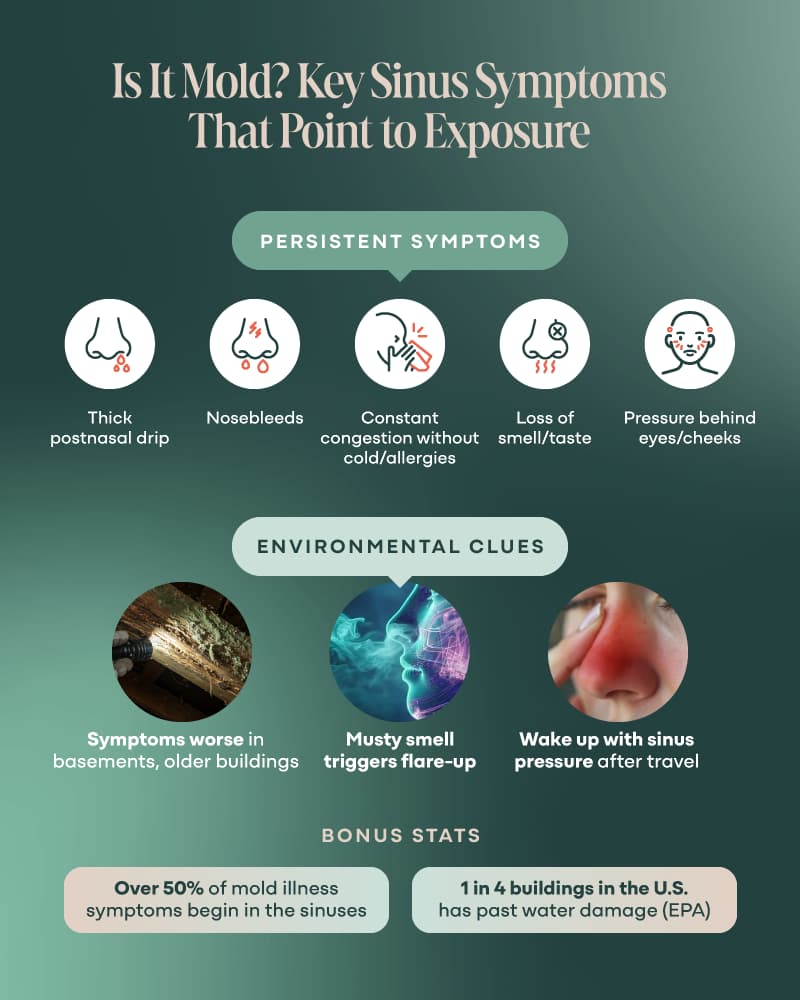
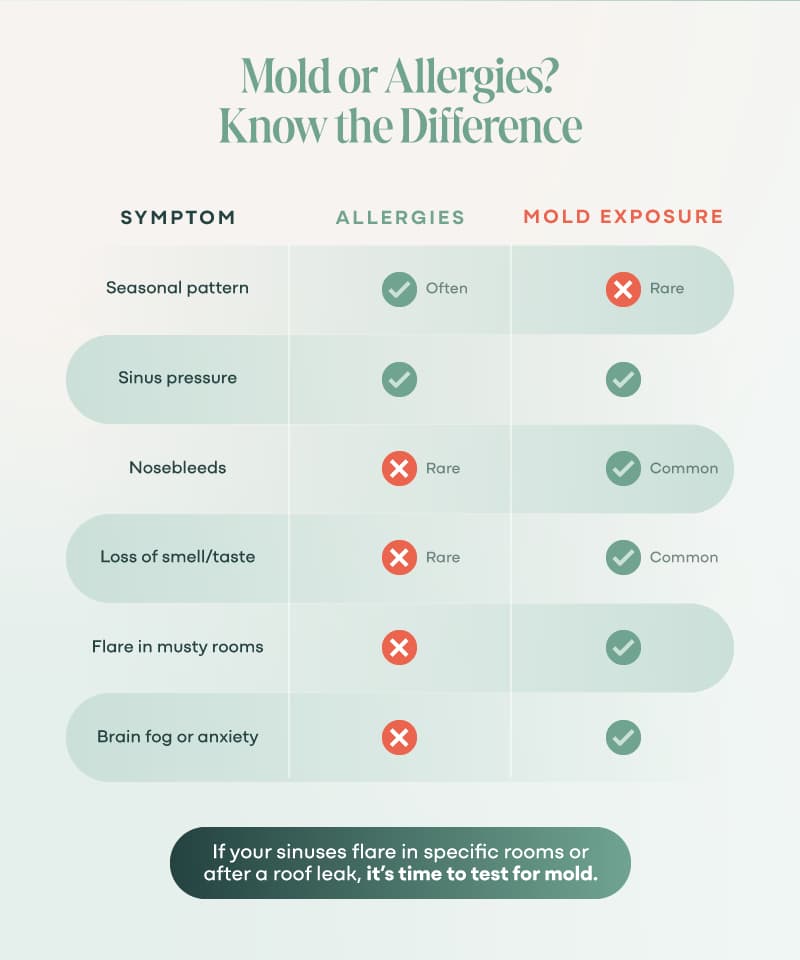
Chronic congestion by itself doesn’t automatically mean mold. Certain patterns, though, make me much more interested in the environment.
- Sinus pressure that gets noticeably worse in certain buildings.
- Congestion that began after a leak, flood, renovation, or move.
- Symptoms that improve when you travel and return when you come home.
- Recurring sinus infections that never seem completely resolved.
- Postnasal drip that keeps coming back.
- New sensitivity to musty smells.
- Headaches or brain fog alongside sinus symptoms.
- Unusual fatigue after spending time in a particular environment.
- Histamine-type reactions such as sneezing, itching, flushing, or increased sensitivity.
In root-cause work, we’re looking for patterns across symptoms, timing, exposures, environment, and the body’s ability to clear what it encounters. That tells us much more than looking at the nose in isolation.
Why Mold Can Be So Hard on the Sinuses
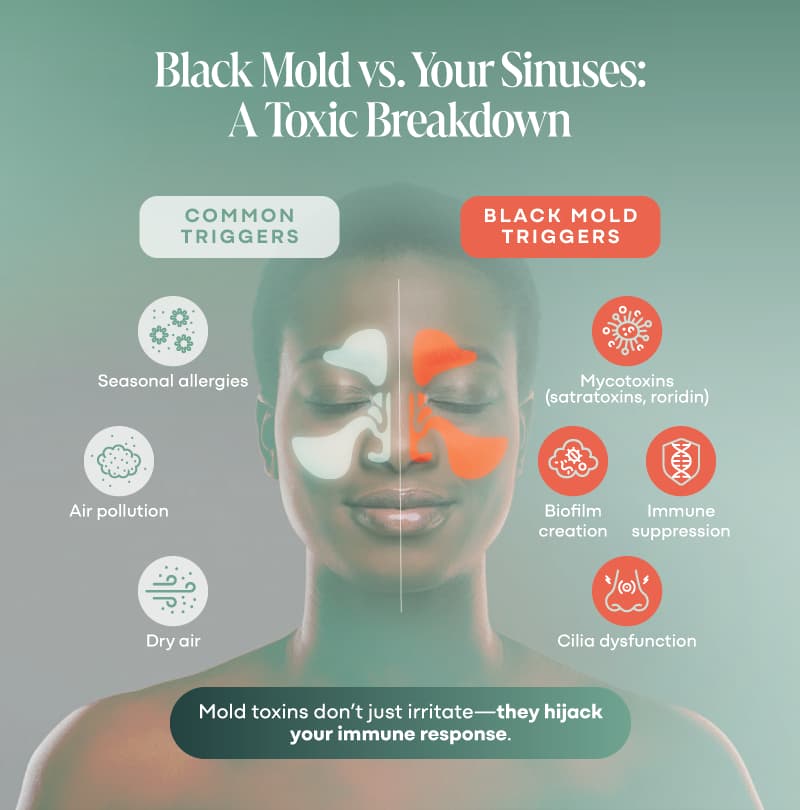
Your sinuses sit directly in the path of what you breathe. Their job includes filtering, moving mucus, and participating in your immune defenses. When those tissues remain irritated and swollen, drainage becomes harder and the local environment changes.
At Detox Nation, we also pay attention to colonization and biofilms in people whose symptoms have become chronic. Biofilms are protective communities microorganisms can create, making the local terrain harder to change.
That is why I don’t like thinking about stubborn sinus problems as simply, ‘You have congestion, so let’s suppress the congestion.’ I want to know why that sinus terrain keeps becoming inflamed in the first place.
How We Can Help
You’re not doomed to live on decongestants and false hope forever. Start with the Mold Toxicity Quiz to begin connecting your symptoms to what might be lurking in your environment.
Take the QuizYour Sinus Problem May Not Stay in Your Sinuses
Someone may start with congestion, sinus pressure, or headaches and then gradually notice brain fog, exhaustion, poor concentration, increased chemical sensitivity, histamine reactions, mood changes, digestive symptoms, poor sleep, or a general feeling that the body has become more reactive.
When symptoms appear in completely different parts of the body, it is easy to assume they must be separate problems. Sometimes they are. Sometimes there is a larger pattern underneath them.

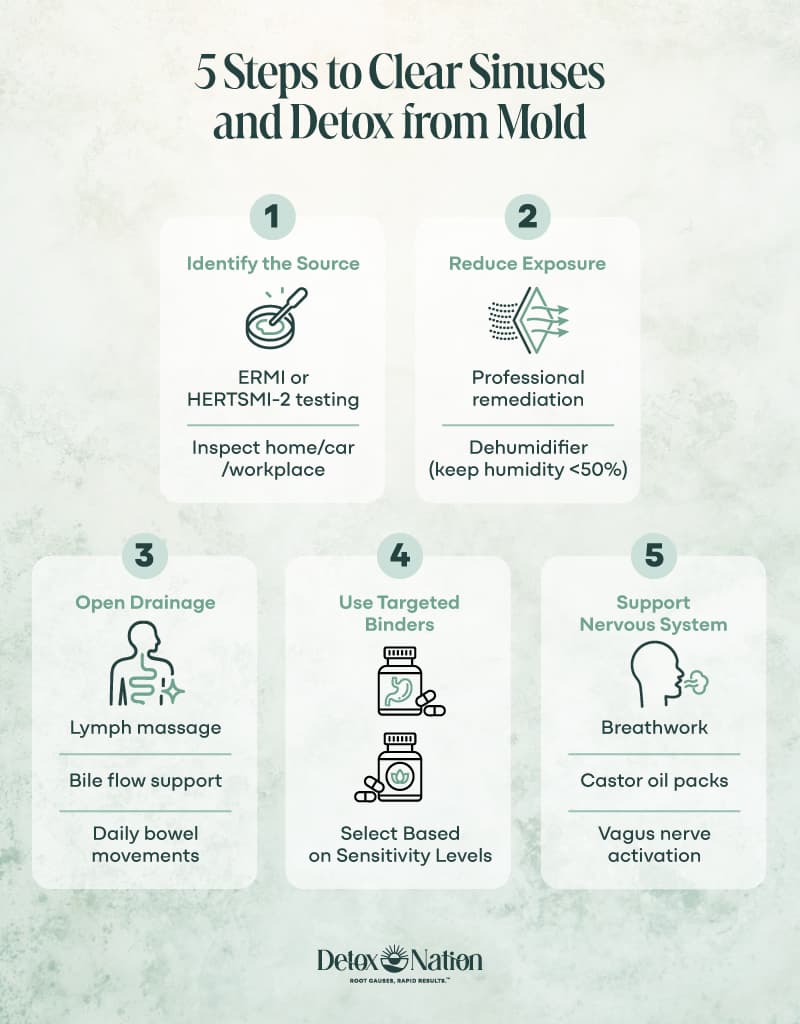
Step One: Look at the Environment
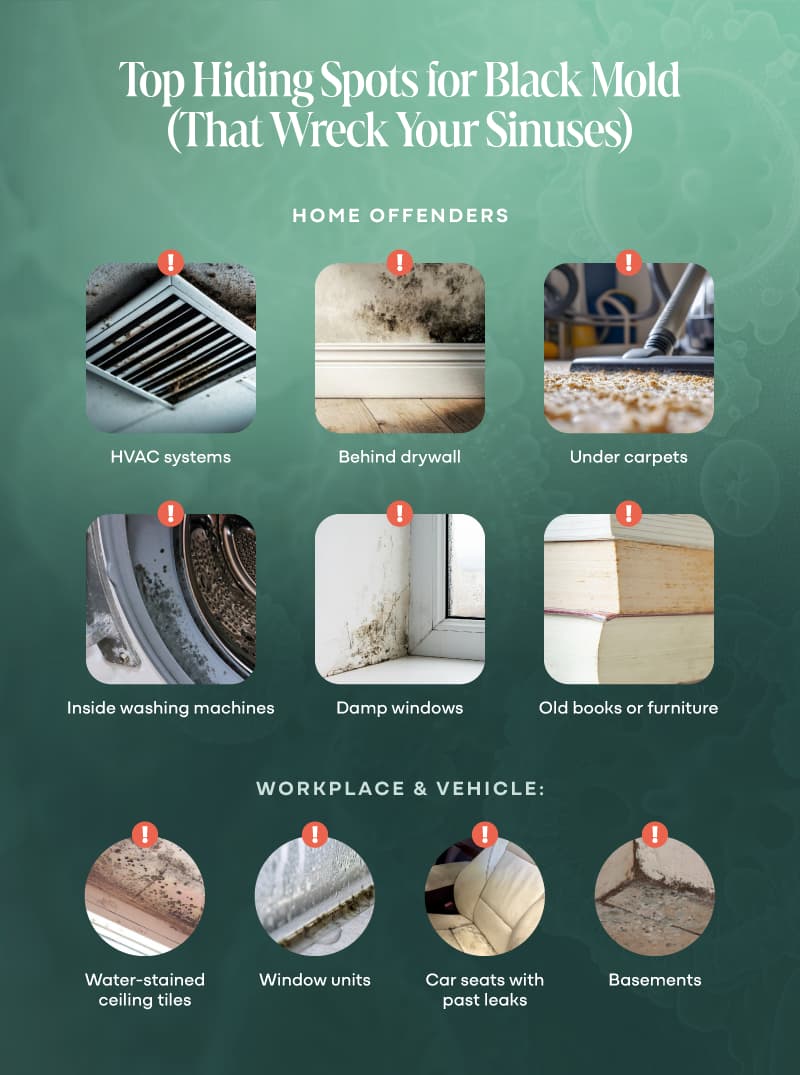
You cannot talk seriously about mold recovery without talking about exposure. If there is ongoing water intrusion or significant mold growth in your home or workplace, that deserves attention.
- Roof leaks, plumbing problems, or flooding.
- Water-damaged drywall or flooring.
- Damp basements or crawlspaces.
- HVAC issues or persistent humidity.
- Musty odors or rooms where symptoms consistently worsen.
- Previous remediation that never fully solved the moisture source.
Your environment is part of your health history too.
Step Two: Respect Your Body’s Capacity
People hear ‘mold detox’ and immediately want to attack the mold. More binders. More antimicrobials. More killing. More detox. For sensitive people, that can be a disaster.
We care first about whether your body has enough capacity to process and eliminate what you’re mobilizing. That means looking at bowel regularity, lymphatic flow, liver and bile support, hydration and minerals, sleep, nervous-system regulation, overall inflammatory burden, and how reactive your system already is.
This is the foundation of our drainage-before-aggressive-detox philosophy. You cannot force a highly reactive body into healing. You have to work with it.
Step Three: Support Elimination
Once drainage is moving appropriately, the next goal is helping the body capture and eliminate what it is clearing. Depending on the individual, we may use different forms of binder support as part of a broader mold protocol.
Binders are not the entire protocol, and more is not automatically better. This is why we teach people to choose support based on their current capacity rather than copying someone else’s aggressive protocol from the internet.
Step Four: Don’t Forget the Sinus Terrain
When sinus symptoms are a major part of the picture, the local terrain deserves attention too. That may include strategies designed to support mucus clearance, healthy sinus drainage, and the microbial environment of the nose and sinuses.
The sequence matters. I don’t want someone throwing ten aggressive interventions at an already inflamed system because they’re terrified of mold. We want steady progress your body can actually tolerate.
The Nervous System Belongs in This Conversation
Living in a body that suddenly reacts to foods, buildings, smells, supplements, or seemingly harmless things is scary. Then you start scanning every room for danger and stop trusting your body.
That does not mean your symptoms are psychological. It means the nervous system and immune system communicate constantly, and your state of regulation affects the terrain you’re trying to heal. Your body needs both less burden and more capacity.
How Do You Know Whether Mold Deserves a Closer Look?
Start with the pattern. What changed around the time your symptoms began? Think about homes, offices, hotels, flooding, renovations, leaks, old cars, travel, and major changes in your health.
Then ask whether your symptoms change when your environment changes, and whether you are dealing with more than a sinus problem. If congestion sits alongside brain fog, fatigue, reactivity, histamine symptoms, digestive issues, or other unexplained changes, that broader picture is useful information.
You Don’t Have to Become Afraid of Every Building
Once people learn about mold, sometimes they begin seeing danger everywhere. That is not the goal.
The goal is understanding your exposures well enough to make informed decisions without living in fear of your environment. I spent enough years feeling confused and afraid in my own body. I don’t want mold education to create a different kind of fear. I want it to give you clarity.
You can investigate. You can support your drainage. You can reduce your toxic burden. You can rebuild capacity. And you can take this one step at a time.
Think Mold May Be Part of Your Picture?
If these patterns sound familiar, start with the existing Mold Assessment / Mold Toxicity Quiz.
You Deserve to Breathe Freely Again
Black mold and its mycotoxins are sneaky, but they’re not invincible. With the right information, support, and a nervous system that’s finally out of crisis mode, your body can clear the mess. Your sinuses can heal. Your brain can come back online. And yes—you can get your energy, focus, and breath back. Take the free Mold Toxicity Quiz to find out if mold is part of your root-cause puzzle.
Take the QuizFAQs
1. How do I know if mold is causing my sinus issues?
If symptoms flare in certain buildings, linger despite meds, or come with brain fog, fatigue, or weird mucus, mold is worth investigating.
2. Can mold actually live in my sinuses?
Yes. Mold can colonize your sinuses, build biofilms, and release toxins that keep your immune system in chaos.
3. Why didn’t my air quality test show black mold?
Stachybotrys spores are heavy and sticky. Standard air tests often miss them. ERMI or HERTSMI-2 testing is more reliable.
4. I already took antibiotics. Why am I still congested?
Antibiotics don’t kill mold or break down biofilms. And mold often invites antibiotic-resistant bacteria to the party.
5. Does mold affect more than just my nose?
Absolutely. Mycotoxins from mold can impact your brain, gut, hormones, and nervous system—far beyond your sinuses.
6. Will detox make me feel worse?
Only if you skip steps. Detoxing without drainage = recirculation = “detox reactions.” Always open your pathways first.
7. What if I can’t move or remediate right now?
Start with gentle binders, nervous system support, and opening drainage. You can still make progress while planning next steps.
8. Is it really fixable?
Yes. Your body is brilliant and never forgets how to heal—once you stop the exposure and support the process properly.