

Common food preservatives are marketed as safe, but your body knows better. From hormone disruption to gut microbiome chaos to oxidative stress, these toxic ingredients come with serious health risks—and they’re hiding in almost everything. Avoid harmful effects and find natural preservative options.
You’ve been lied to.
For decades, the food industry has pushed the idea that their products are not only safe but good for you—convenient, healthy, and backed by “science.”
But the truth?
Much of what’s in your refrigerator and pantry is loaded with chemicals that extend shelf life at the cost of your health.
Preservatives keep your food looking fresh long past its natural expiration date, but many of them disrupt hormones, damage cells, and fuel chronic inflammation.
Preservatives are designed to maximize profit while minimizing real nutrition.
If you’ve ever wondered why chronic illness is skyrocketing while “healthier” food options flood the market, it’s time to pull back the curtain.
In this article, I’ll break down what’s really in your food, why it’s harming you, and most importantly—how to get it out of your life.
Key Takeaways
- Preservatives aren’t just extending shelf life—they’re harming your health.
- Parabens, BHA, and BHT are sneaky endocrine disruptors.
- You have the power to change your diet and health.
Artificial vs. Natural Preservatives: What’s the Difference?
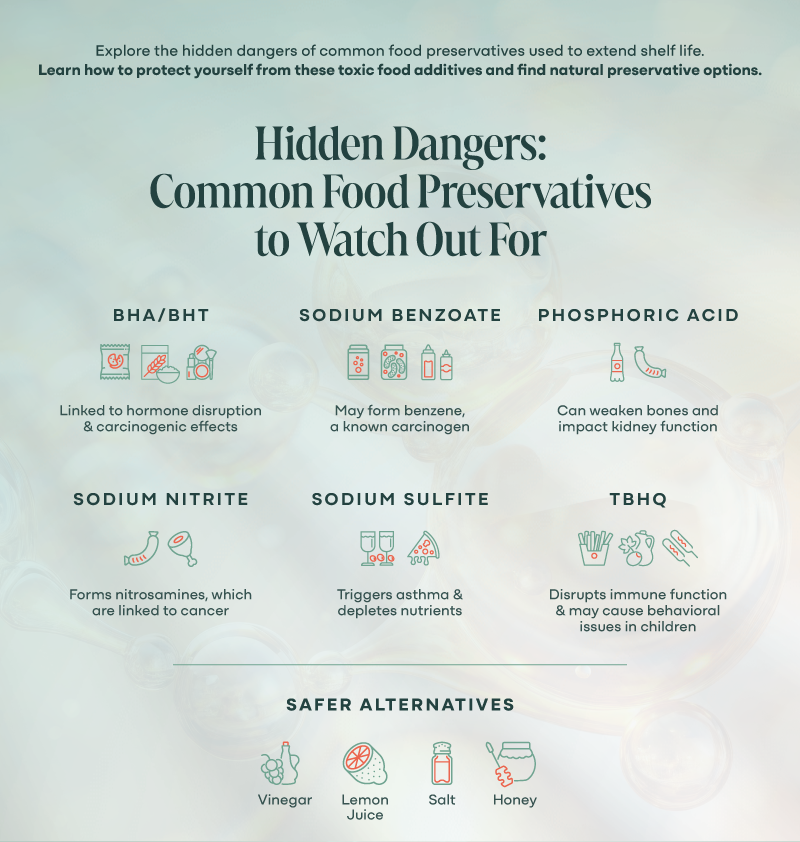
There are two primary classifications of preservatives: natural and artificial.
Natural preservatives—like salt, vinegar, lemon juice, honey, and rosemary extract—have been used for centuries to keep food fresh without harming your health.
These work by naturally inhibiting bacterial growth and oxidation, without disrupting your hormones or damaging your cells.
They’re the reason your great-grandparents could preserve food for a short time without a side of endocrine disruption.
Artificial preservatives, on the other hand, are a whole different beast.
These lab-created chemicals, like BHA, BHT, TBHQ, sodium benzoate, and phosphoric acid, are designed to extend shelf life and improve texture at the cost of your health.
Many of them are derived from petroleum (yes, like gasoline), and they’ve been linked to hormone disruption, oxidative stress, gut imbalances, and even cancer.
Unlike natural preservatives, which your body can process and eliminate, artificial preservatives accumulate in your system over time, contributing to chronic inflammation and long-term health issues.
In short?
If your food needs a synthetic chemical to last for months or years, it probably shouldn’t be in your body in the first place.
In this deep dive, we’ll break down the most common preservatives, why they’re used, and what they might be doing to your health.
How We Can Help
Guiding people to reclaim their health and vitality is our greatest joy. Our entire practice is dedicated to supporting you to be who you really are, at home in your body, because your body is able to heal itself.
Book A CallCommon Food Preservatives Used in the US
Preservatives: the double-edged sword of the food world.
On one hand, they keep your favorite snacks from turning into a science experiment overnight.
On the other, many of them come with a side of potential health nightmares.
So, what’s really hiding in your pantry?
First up – parabens.
Parabens
Ever heard of parabens?
They’re common preservatives used in pharmaceuticals, foods, and personal care products like shampoo, conditioner, makeup, and even toothpaste.
Parabens can be found in beer, pickles, jams, desserts, sodas, processed vegetables, sauces, and syrups.
Their job is to keep mold and bacteria from growing in your favorite products, but here’s the downside—they also disrupt your hormones by mimicking estrogen in your body (13).
Over time, this can lead to problems like hormone imbalances, fertility issues, and even an increased risk of certain cancers.
While you’re slathering on what you think is your “clean” moisturizer, enjoying your favorite local brew, or getting your pickle fix, these parabens are quietly making your hormones weird.
Potassium Sorbate
Potassium sorbate might not sound like a big deal—it’s just used to keep mold and yeast from turning your favorite foods into a petri dish (17).
But while it’s effective at extending shelf life in everything from baked goods, cheese, and wine to salad dressings, dried fruits, and personal care products it’s not without issue.
Potassium sorbate causes increased gut inflammation, changes in microbial composition, gut dysbiosis, and even liver inflammation (17, 23).
Some alternative names you might see on a food label include Sorbic Acid and Hexadienoic Acid.
BHA
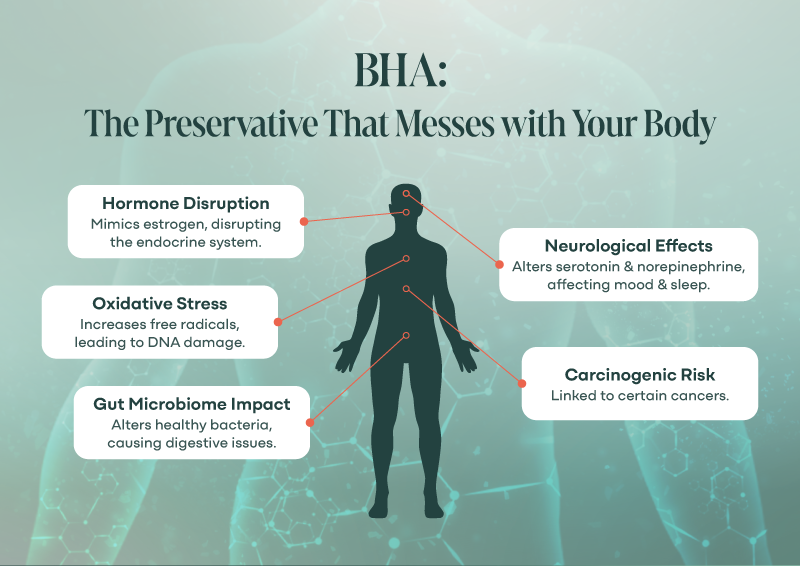
BHA, or butylated hydroxyanisole, is a synthetic antioxidant used to keep fats and oils from spoiling. It’s been identified in the environment and in human tissues due to its extensive use (6).
You find it in packaged foods like snacks and baked goods, but it’s also in food packaging, medications, and cosmetics (11).
It’s also used to keep Essential Oils from going rancid (32)!
BHA can interfere with your thyroid gland; metabolism and growth; nervous system, reproductive system, and more (6, 11).
It has various mechanisms to damage your health, including (6):
- Endocrine disruption (11)
- Genotoxicity & DNA damage (9)
- Energy metabolism disturbance
- Increased Reactive Oxygen Species (otherwise known as “free radicals”)
- Interruption of cellular signaling pathways
- Calcium balance disruption
- Carcinogenesis (9)
- Sleep changes (11)
- Disruptions in brain serotonin and norepinephrine (11)
Propylene Glycol
Propylene glycol acts as a humectant, keeping foods moist and enhancing flavors.
It’s been used in salad dressings, ice cream, and cake mixes for years. More recently, it’s also used as a main ingredient in e-cigarettes, lending to the health consequences of vaping.
Propylene glycol can also be used to chemically extract desired substances from a larger mixture. For example, the popular supplement propolis can be extracted from the resins collected by bees and stored in their hives.
A 2023 animal study found rats fed propolis extracted using propylene glycol developed liver cell dilation and bleeding as well as brain cell death (8).
I don’t know about you, but I want to keep allll my brain cells!
BHT
Like BHA, butylated hydroxytoluene (BHT) is a synthetic antioxidant that prevents oils from becoming rancid.
It’s often used in cereals and snack foods.
It’s also found in cosmetics (7), rubber (10), and in food packaging (11) where it can leach into your food. (But when BHT is in the packaging, it does not have to be listed on the label!)
A 2024 study found that food sources of BHT make up 77% and 68% (respectively) of children and adult exposure (12).
BHT has been linked to sleep changes, alterations in brain serotonin and norepinephrine, endocrine disruption, reproductive disorders, fibrosis, and (in one study) increased proliferation of a uterine tumor (10, 11).
Sodium Benzoate
Ah, sodium benzoate (also called E211, Sobenate, Antimol, Benzoic acid, and sodium salt
on food labels)—sounds like something from your high school chemistry class, right?
It’s hanging out in your pantry, hiding in sodas, condiments, and even pickles.
Sodium benzoate is commonly used in acidic foods to prevent bacteria and mold growth.
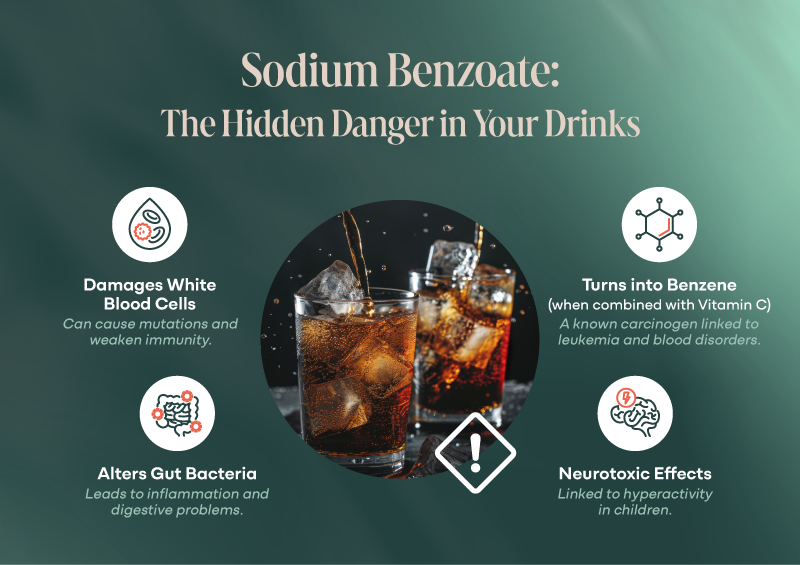
But when mixed with vitamin C, it can form benzene—an industrial chemical linked to cancer.
I know, not what you signed up for when you grabbed that “healthy” juice, right?
Sodium benzoate – like so many of these additives – contributes to gut dysbiosis (17) and decreases the production of healthy branched chain fatty acids (14).
It’s also toxic to lymphocytes (a special kind of white blood cell) and can cause them to have genetic mutations (16).
One study looked at sodium benzoate as a possible treatment for resistant schizophrenia, so that tells me it impacts the brain (15). Maybe that’s good news if you have schizophrenia, but what does it do to a neurotypical brain?
Hmmm, who wants a side of potential health risks with their snack?
TBHQ
TBHQ—another mystery acronym hiding on your food label!
Tertiary butylhydroquinone is a synthetic preservative made from butane (yes, like lighter fluid!) and used to keep processed foods “fresh” longer.
You’ll find it in frozen meals, crackers, oils (19), and even pet foods. (Looking at you, Pop Tarts and Cheez-Its!)
While one study found it may reduce neuroinflammation and oxidative stress (18), another study stated that it’s considered to be “highly unsafe…causes serious damage to human health (19).”
Still more studies have raised concerns about its potential to cause cellular damage, immune system disruption, and even behavioral issues in kids (30).
Propyl Gallate
Propyl gallate, also called Gallic Acid or Nipa 49, is an antioxidant used to extend the shelf life of foods like vegetable oils, meats, and chewing gum (28).
It has been banned in other countries but is still in use in the US.
While it helps keep products fresh longer, it may pose health concerns. Some studies suggest propyl gallate could be a potential carcinogen, although more research is needed to confirm these effects.
In a 2023 study, propyl gallate was found to increase mitochondrial stress, cell death, free radicals, and DNA damage in mice oocytes (female reproductive eggs) (24).
The long-term impact on human hormones and fertility is still being uncovered, but it’s not looking good.
Phosphoric Acid
Phosphoric acid is a common additive used to acidify and flavor foods, particularly soft drinks.
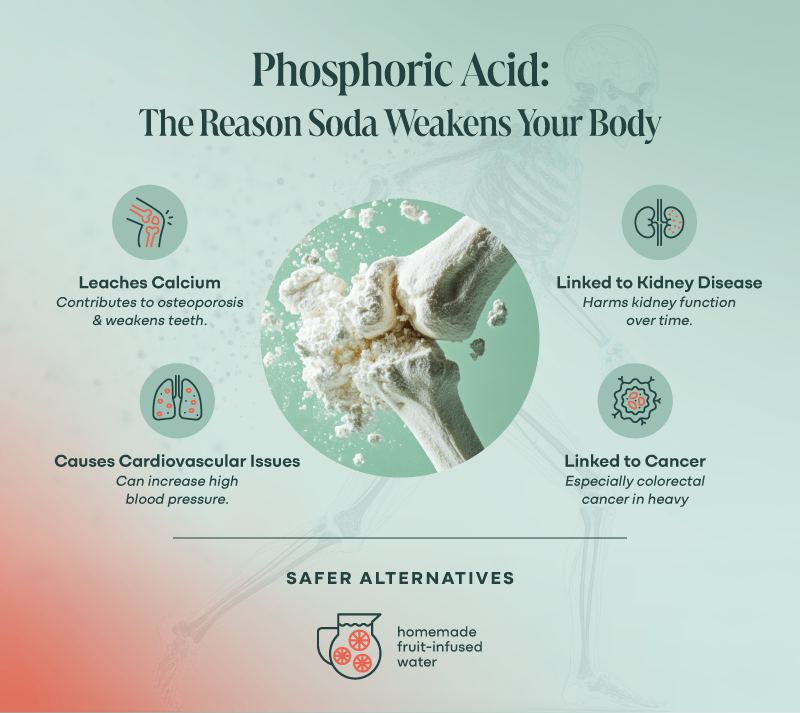
This industrial-strength acid adds tang to your sugary drinks, but it also pulls calcium from your bones like a magnet.
You may already know that sodas are linked to bone density issues and tooth decay, in large part due to phosphoric acid (20).
But did you know it also contributes to cardiovascular disease, kidney disease and tumor formation (22)? (Especially colorectal cancer.) (29)
Specifically, it increases high blood pressure, increases the activity of your sympathetic nervous system (fight or flight), increases vascular stiffness, impairs endothelial dilation, and causes kidney damage (21).
Most adults now consume DOUBLE the recommended daily allowance for phosphoric acid (22). And what about our kids?
You can also find it on labels as inorganic phosphate, hydrogen phosphate, and E338.
It’s just another example of how food manufacturers trade our health for shelf stability and profit.
Sodium Sulfite
Sodium sulfite is the behind-the-scenes fixer in the food world, quietly keeping dried fruits bright, wine fresh, and processed foods from sprouting mystery growths.
It’s part of the sulfite family, a group of preservatives used to prevent oxidation and bacterial growth.
In theory, it sounds great—who doesn’t want their food to last longer without growing fuzzy patches?
But for some people, especially those with sulfite sensitivity or asthma, sodium sulfite is less of a convenience and more of a respiratory nightmare.
Symptoms can range from mild headaches to full-blown asthma attacks, making it one of those ingredients that’s quietly problematic for a chunk of the population (33).
The FDA had to ban it from being sprayed directly on fresh produce after it caused severe reactions in consumers.
Even if you don’t have a sulfite sensitivity, your body still must work overtime to detox it.
Sulfites can deplete glutathione, your body’s master antioxidant, which means less cellular protection and more oxidative stress (33).
Sulfites may also deplete thiamine (vitamin B1), a key nutrient for nervous system function and energy metabolism.
Chronic exposure could leave you feeling foggy, fatigued, and more anxious than necessary—not exactly the trade-off you want for a slightly fresher-looking raisin.
Sulfur Dioxide
Sulfur dioxide (SO2), released by sulfites, is widely used to prevent spoilage and maintain the appearance of food.
Sulfur dioxide often appears in dried fruits, fruit juices, medications, seafood, meats, and wines to help preserve color and taste.
SO2 has been associated with gut dysbiosis and related vitamin deficiencies (1).
It impacts the microbiome in your mouth too, decreasing the quantity of the oral microbiome within ten minutes of contact (1, 5)!
Once study found testicular changes in mice fed sulfur dioxide, including oxidative (DNA) damage, cell death, and reduced testosterone production (2, 3). With all the fertility issues in our society, research like this makes sense.
You can also be exposed to Sulfur Dioxide via air or contact with the skin. It was actually voted the 2024 Contact Allergen of the Year to raise awareness (4).
Sodium Nitrite
Sodium nitrite is the reason your bacon stays pink instead of turning an unappetizing shade of gray.
It’s a powerful preservative that prevents bacterial growth (including Clostridium botulinum, aka botulism), and for that, we should be grateful.
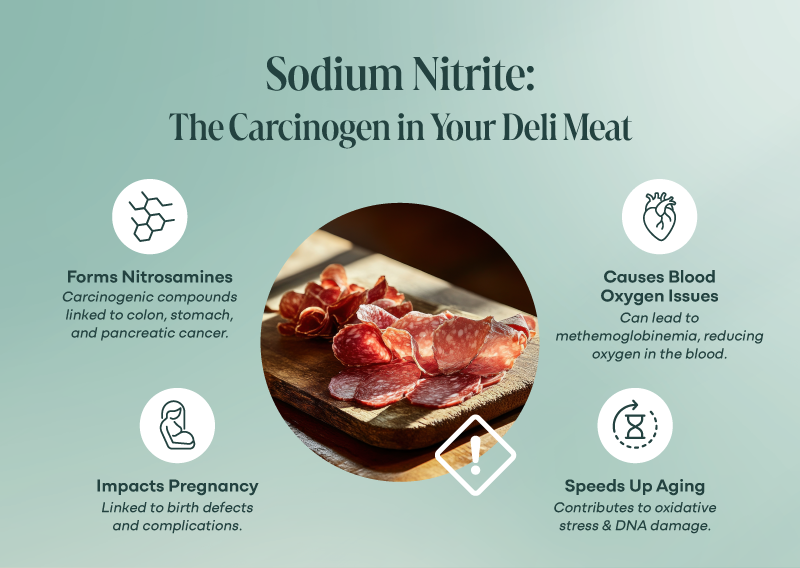
But here’s the catch—when it hits high heat or mingles with stomach acid, it can form nitrosamines, which are classified as “probable carcinogens.” (26)
They are linked to cancers of the colon, stomach, and pancreas.
Sodium Nitrite may cause pregnancy complications and developmental disorders (26).
Some studies suggest it can impair blood vessel function and nudge your metabolism in the wrong direction—so if you’re wondering why you feel sluggish after eating processed meats, it’s not just the food coma.
Yet, the food industry shrugs and reassures us that adding a little vitamin C to processed meats somehow makes it all okay.
Shocker: It doesn’t.
Beyond its cancer connections, sodium nitrite can also contribute to oxidative stress, which is a fancy way of saying it messes with your cells and speeds up aging.
Or worse, nitrite consumption can lead to nitrite poisoning.
This occurs when nitrites crash the party in your bloodstream, take over your hemoglobin, and turn it into a version that refuses to carry oxygen.
The result? Methemoglobinemia—a fancy way of saying your blood cells are slacking on the job (26).
First, you might notice your lips and fingers going Smurf-blue (cyanosis), then your heart starts throwing off irregular rhythms like a drummer with no sense of timing (cardiac dysrhythmias).
If things get worse, your circulation slows to a crawl, and your brain—being the diva that it is—starts to protest.
Mild symptoms? Dizziness and brain fog. More serious? Lethargy, seizures, or even a full-on coma (26).
How to Protect Yourself from Preservatives in Food (Without Losing Your Sanity)
Dodging preservatives in today’s food landscape can feel like navigating a minefield while blindfolded.
But don’t worry, you don’t need to live off the land or start fermenting everything in sight (unless you’re into that).
Here’s how you can take control and protect yourself from the chemical chaos in your fridge and pantry.
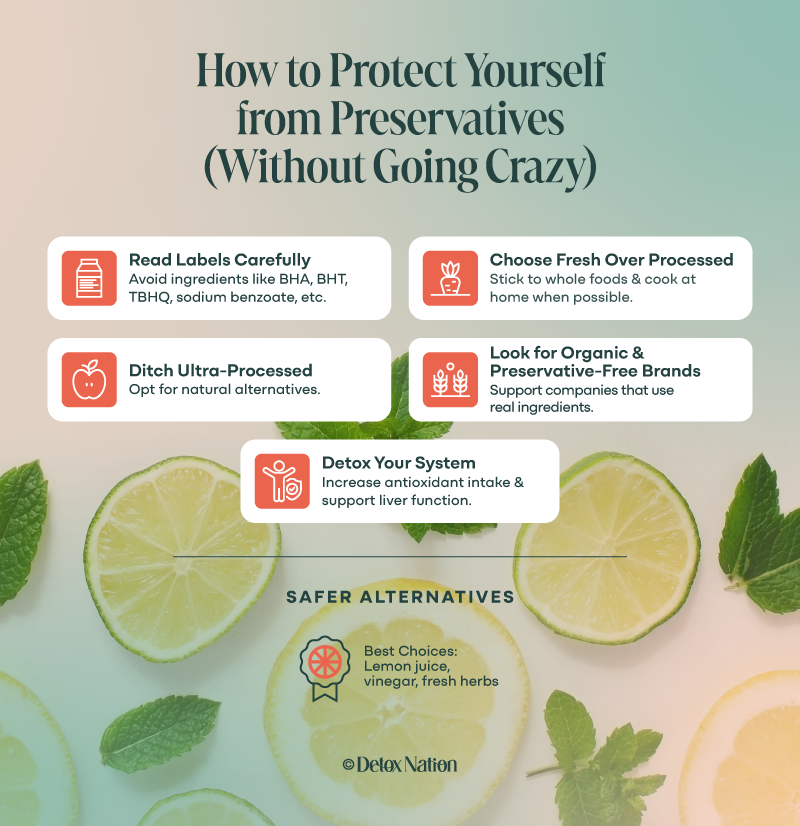
Become a Label Detective for Food Safety (It’s Easier Than You Think)
Flip that package over—because the front is nothing but marketing fluff.
“Natural,” “heart-healthy,” and “clean” mean absolutely nothing if the ingredients list reads like a chemistry experiment.
Look for the big offenders: BHA, BHT, TBHQ, sodium benzoate, phosphoric acid, and anything with “propyl” in the name (because if it sounds like a science fair project, it probably is).
If you wouldn’t cook with it in your own kitchen, it’s best to pass.
And watch out for sneaky names—preservatives love to go incognito under aliases like “E211” (sodium benzoate) or “butylated hydroxyanisole” (just say no).
Ditch the Ultra-Processed Foods
I know, I know—life is busy, and sometimes you just need a quick meal.
But here’s the deal: the more processed a food is, the more preservatives it’s likely to contain.
That’s why those boxed cookies stay “fresh” for six months and your grandma’s homemade ones last three days (spoiler: real food spoils, fake food doesn’t).
Start by swapping out the worst offenders—packaged snacks, flavored yogurts, processed meats, and store-bought baked goods—for whole food alternatives.
Can’t give up convenience?
Try brands that use real ingredients without preservatives.
They exist—you just have to look past the grocery store’s middle aisles, where food goes to die (but never actually decomposes).
Cook at Home (Yes, Even If You “Can’t Cook”)
Before you roll your eyes, hear me out.
You don’t have to be a gourmet chef to make simple, preservative-free meals.
Start with the basics: swap out bottled salad dressings (usually loaded with potassium sorbate and sodium benzoate) for a healthy oil and lemon.
Skip the boxed mashed potatoes and make real ones in 10 minutes.
Buy whole ingredients—veggies, meats, grains—and cook them without a side of propyl gallate.
If time is your excuse, batch cook on the weekends.
If skill is your excuse, just know that sautéing vegetables in butter is infinitely easier than reading a food label full of preservatives you have to Google. And bonus? It tastes better, too.
Choose Fresh Over Shelf-Stable Whenever Possible
That long shelf life isn’t magic—it’s chemistry at your expense.
Food that’s been “preserved” for months (or years) usually comes with a chemical cocktail to keep it looking edible.
That means canned, pre-packaged, and frozen meals often carry preservatives like BHT and TBHQ to keep oils from spoiling and colors from fading.
Instead, go for fresh or frozen whole foods.
If you must buy packaged, choose options with minimal ingredients—like frozen fruit that only lists “strawberries” instead of “strawberries, citric acid, sodium benzoate, and a partridge in a pear tree.”
Support Brands That Ditch the Chemicals
Not all food companies are out to poison you for profit.
Some actually care about health and make clean, preservative-free products—but they need your support.
Seek out brands that use real food ingredients, organic whenever possible, and zero unnecessary additives.
And if you’re thinking, But isn’t organic expensive?—consider this: you either pay for good food now or pay for medical bills later.
Invest in what fuels your body, not what slowly wrecks it.
Detox the Damage (Because We’ve All Been Exposed)
Even with the best efforts, you’ve probably accidentally eaten your weight in preservatives over the years—but your body is always working to heal. Help it out by:
- Supporting your liver with foods like cruciferous veggies (like broccoli, cauliflower, and Brussels sprouts if your body can tolerate them), lemon water, and dandelion tea.
- Boosting antioxidants with berries, green tea, and high-quality vitamin C to combat oxidative stress from chemical exposure.
- Sweating it out with infrared saunas, exercise, or dry brushing to help your body eliminate toxins faster.
- Healing your gut and restoring the microbial balance preservatives love to destroy.
Think of it this way: you’re not just avoiding chemicals—you’re actively rebuilding your health.
And every step you take away from preservatives and toward real, nourishing food is a win.
Progress, Not Perfection
Will you accidentally eat something with preservatives at some point?
Of course.
We live in the real world.
The goal is awareness.
The more you learn, the more you can make choices that support your health.
Start small, swap out what you can, and trust that every step away from chemical-laden food is a step toward real vitality.
And if you ever feel discouraged, just remember: your great-grandparents never had to read labels, and they weren’t eating TBHQ-laced crackers. It’s time to get back to real food.
Bringing it All Together
It’s not just one preservative, one ingredient, or one meal—it’s the cumulative effect of a lifetime of exposure that takes its toll.
The food industry has stacked the deck against us, filling our pantries with products designed for profit, not health.
But you’re not powerless.
You can start right now: read labels, ask questions, and opt for fresh, whole foods whenever possible.
Swap chemical-laden condiments for homemade versions.
Choose real fats over industrial oils.
Support brands that prioritize quality over convenience.
The small steps you take today add up to massive shifts in your long-term health.
Your body is always working to heal—you just have to give it the right tools.
Learn more in our Rapid Gut Reset!
Let’s make sure what’s on your plate is fueling your health, not fighting it.
How We Can Help
Guiding people to reclaim their health and vitality is our greatest joy. Our entire practice is dedicated to supporting you to be who you really are, at home in your body, because your body is able to heal itself.
Book A CallFAQs
1. What are some types of artificial preservatives found in food and their potential health consequences?
Some of the most harmful preservatives include BHA, BHT, sodium benzoate, potassium sorbate, TBHQ, and sodium nitrite. These additives are used to prevent browning, increase shelf life and prevent food spoilage and have been linked to negative side effects like hormone disruption, gut inflammation, and even carcinogenic effects. It’s best to avoid food items with natural and artificial preservatives as much as possible.
2. Are all types of preservatives bad for you?
Not all preservatives are created equal. Some, like vinegar, lemon juice, salt and sugar, have been used for centuries to naturally preserve food without massive harmful effects. (Of course, moderation is key!) The real problem comes from synthetic chemical preservatives like BHA, BHT, TBHQ, sodium benzoate, and phosphoric acid, which have been linked to devastating health effects including hormone disruption, gut dysbiosis, oxidative stress, and even cancer.
3. How do I know if a food has preservatives?
Read the ingredients list, looking for anything that sounds more at home in a chemistry lab than a kitchen. Watch out for tricky names like E211 (sodium benzoate), E319 (TBHQ), and BHA/BHT. If you see a long list of unpronounceable ingredients, that’s a red flag. A good rule of thumb? If your grandma wouldn’t recognize it, you probably shouldn’t eat it.
4. What are the worst preservatives to avoid?
The worst artificial preservatives include:
- BHA & BHT – Linked to hormone disruption, DNA damage, and sleep disturbances.
- TBHQ – A petroleum-based preservative tied to immune system dysfunction and neurotoxicity.
- Sodium Benzoate – Can turn into benzene (a known carcinogen) when combined with vitamin C.
- Phosphoric Acid – Strips calcium from bones, damages kidneys, and contributes to metabolic issues.
- Sodium Nitrite – Preserves processed meats but can form carcinogenic nitrosamines when heated.
If you see any of these on a label, run in the opposite direction.
5. Can I detox from preservatives if I’ve been eating them for years?
Absolutely! Your body is incredibly resilient and constantly working to repair damage. To speed up the detox process, support your liver and heal your gut, increase your antioxidant intake, and make sure your detox pathways are wide open!