
Can Mold Affect Your Mood? What I Wish Someone Had Asked Me
There was a stretch of my life when I barely recognized myself.
I was exhausted, depressed, foggy, reactive, and losing confidence in my own mind. I kept trying to solve each symptom separately because that was how everyone around me was looking at it too.
What nobody asked me was whether my environment could be contributing to what was happening in my brain and nervous system.
That question would have changed a lot for me.
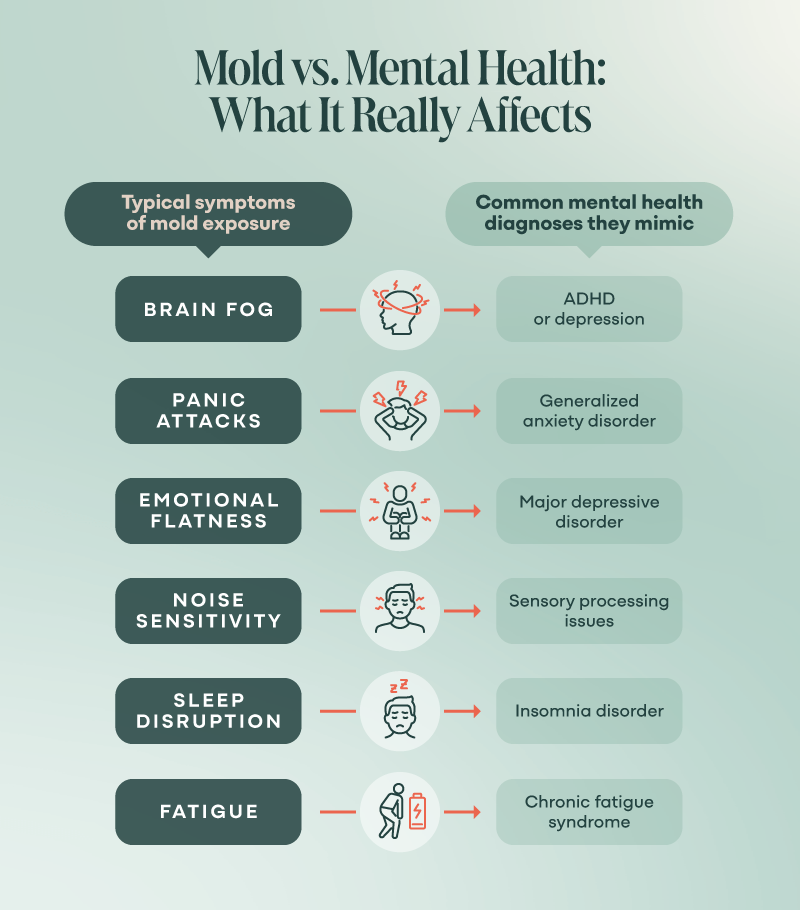
Mold exposure is usually associated with respiratory symptoms, but for some people the picture is much broader. Anxiety, depression, irritability, poor sleep, brain fog, emotional flatness, and a nervous system that seems unable to settle can all appear alongside mold-related illness.
That does not mean every difficult mood is mold. It means the environment deserves a place in the conversation when the pattern fits.
The Clues I Pay Attention To
Mood symptoms become much more interesting to me in a mold case when they sit beside other changes that are hard to explain.
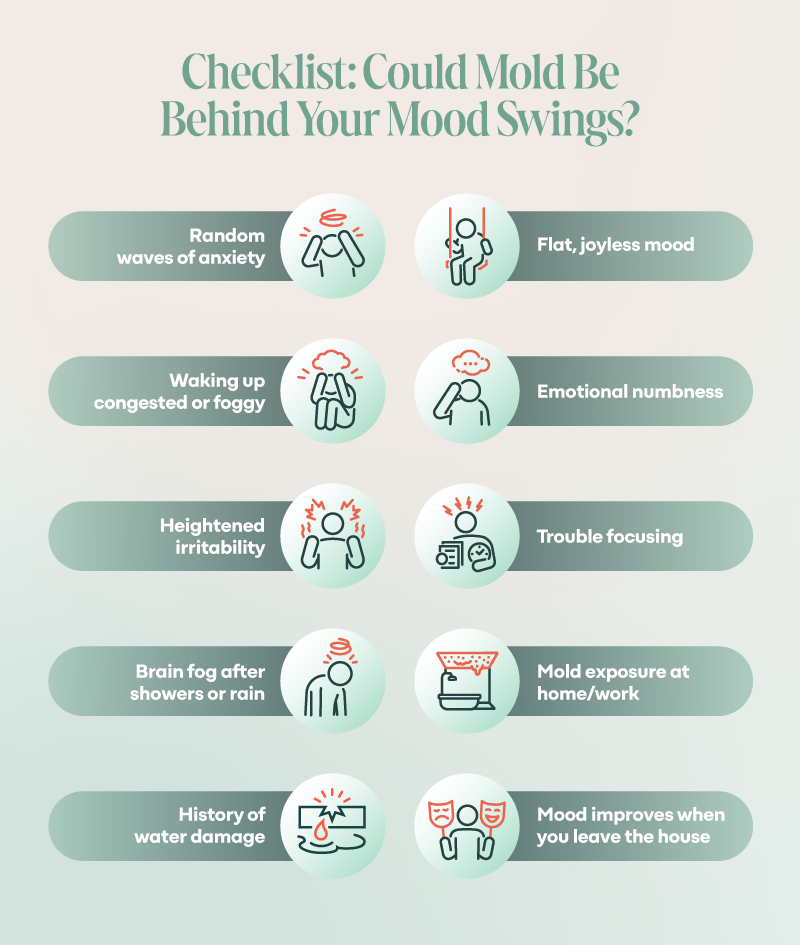
- Anxiety or panic that worsens in a specific building.
- Feeling noticeably better when you travel or spend time away from home.
- New brain fog, memory problems, or trouble finding words.
- Sleep that suddenly becomes fragmented or restless.
- Headaches, sinus symptoms, histamine reactions, or new chemical sensitivities.
- A major shift after a leak, flood, move, renovation, or time in a water-damaged building.
- A body that has become far more reactive to foods, smells, supplements, or stress.
One symptom rarely tells the story. The pattern does.
Why Mold Can Affect More Than Your Lungs
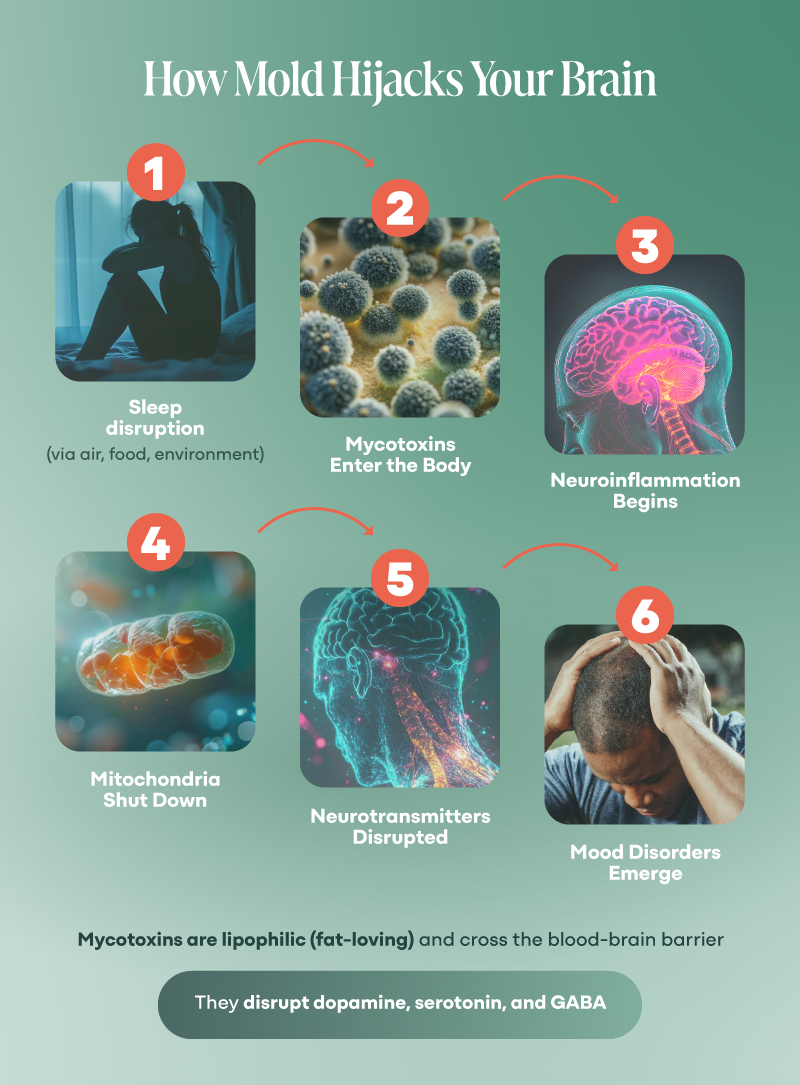
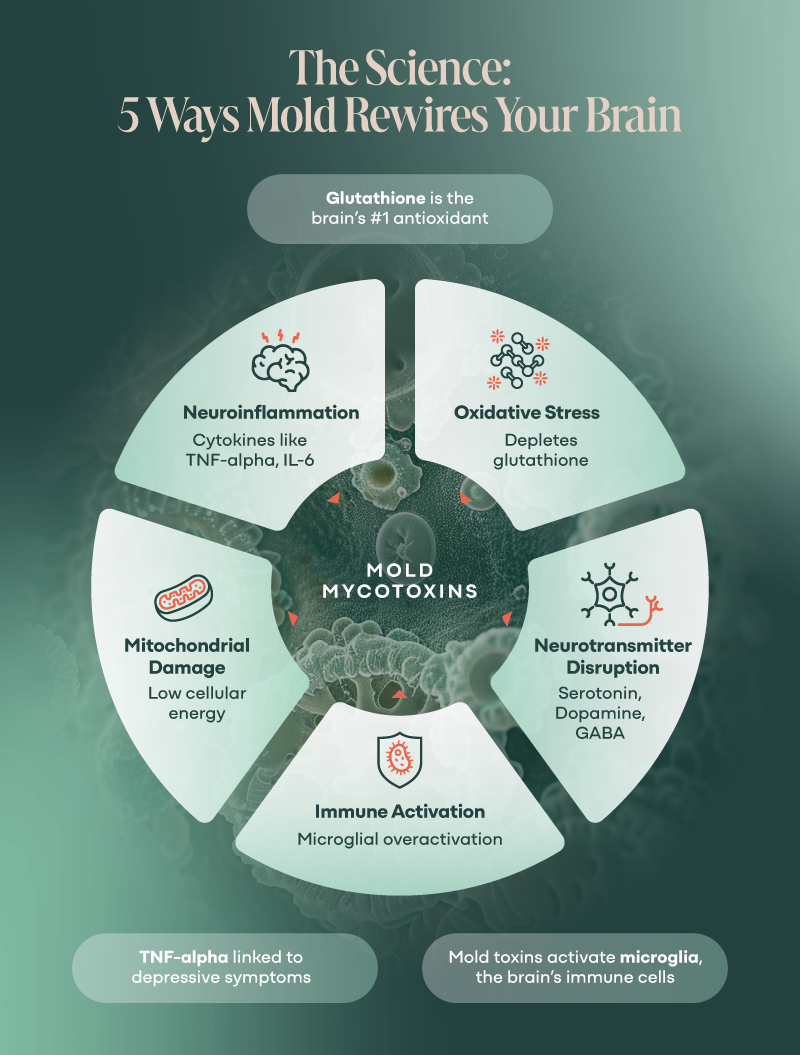
Some molds produce mycotoxins, and the research cited in the current article explores several ways mycotoxin exposure may affect the nervous system, including oxidative stress, mitochondrial function, inflammatory signaling, and neurotransmitter activity.
That matters because mood is not separate from biology. The brain needs energy. It responds to immune signals. It depends on healthy neurotransmitter function. When the system is under a heavy inflammatory or toxic burden, emotional resilience can change too.
This is one of the reasons I push back when someone is told that unexplained anxiety or depression must be ‘just stress’ while other physical clues are being ignored.
Mental and emotional symptoms are real symptoms. They deserve the same curiosity as digestive symptoms or a chronic cough.
Ready to start healing?
Find out where you are in the process—and what your body’s trying to tell you.
Take the Free Mold AssessmentYour Environment Is Part of Your Health History
I want people to get much better at taking an exposure history.
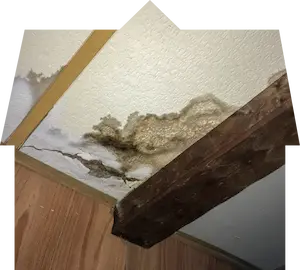
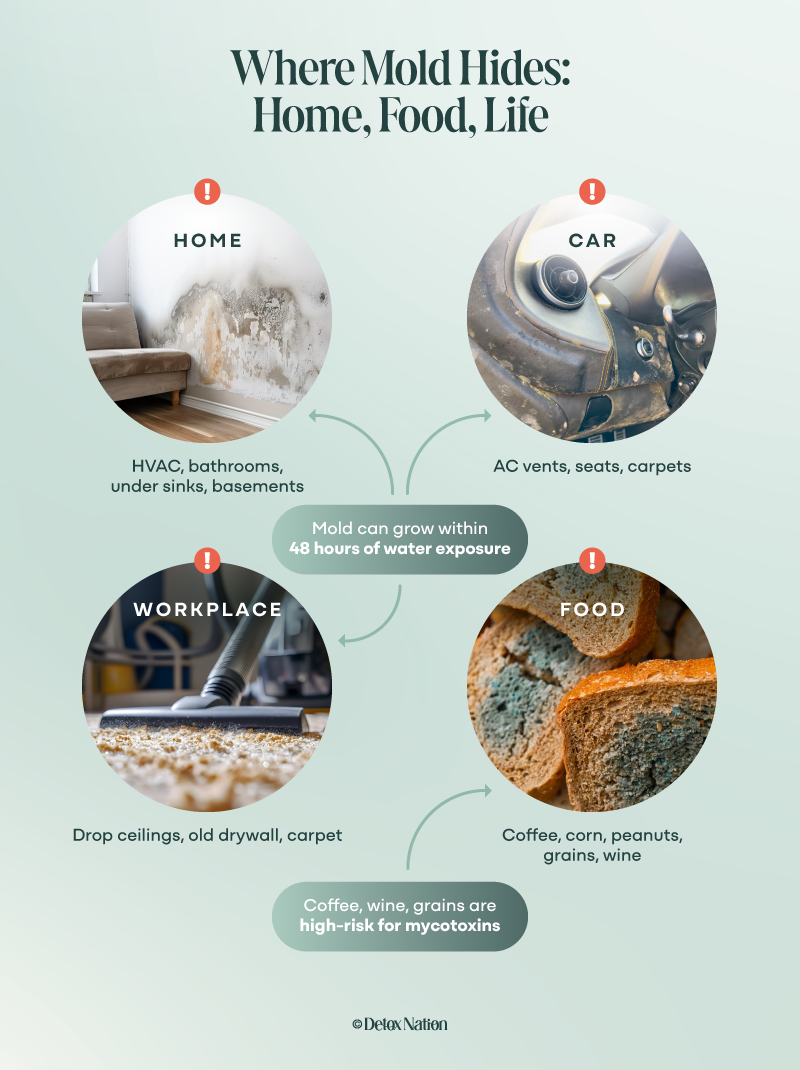
Think beyond obvious black mold on a wall. Ask about roof leaks, plumbing leaks, damp basements, HVAC issues, musty rooms, old water damage, office buildings, cars, previous homes, and places where you consistently felt worse.
The current article also discusses food sources that can carry mold contamination. Keep those details and references if Sinclair wants them retained, but the main point is simple: exposure can come from more than one place, and cumulative burden matters in the Detox Nation model.
Why ‘Push Through It’ Can Backfire
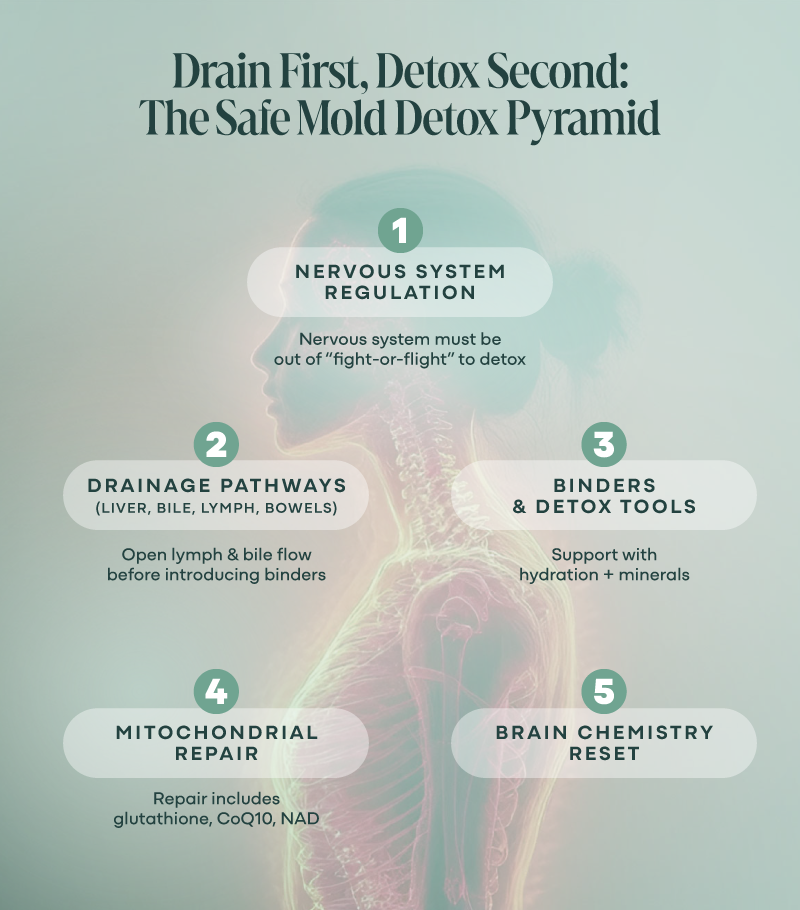
When someone suspects mold, the instinct is often to detox harder. But a highly reactive nervous system and backed-up drainage pathways are not a great setup for an aggressive protocol.
At Detox Nation, we start by asking what the body can actually handle right now.
That usually means supporting the basics first: bowel regularity, hydration and minerals, liver and bile flow, lymph movement, sleep, and nervous-system regulation. Then deeper detox support can be layered in based on the person’s capacity.
This is less dramatic than throwing every supplement at the problem, but it is much more respectful of a sensitive body.
What Healing Can Look Like
One of the most hopeful things I see is that people often start to recognize themselves again as the overall burden comes down.
Their head feels clearer. Their reactions feel less extreme. They sleep more deeply. They have more emotional range and resilience.
That shift is not proof that every mood symptom was caused by mold. It is a reminder that the brain, immune system, nervous system, gut, and environment are connected.
If your emotional symptoms arrived alongside unexplained physical changes or a meaningful exposure history, I would not ignore that pattern.
Start With Curiosity, Not Fear
You do not need to decide today that mold is definitely the answer.
Start by getting curious about when your symptoms began, where you spend your time, and whether your body behaves differently in different environments.
Use the existing Mold Assessment to connect your symptom history with potential exposures. If the pattern points toward mold, then you have a clearer next question to investigate.
That is what root-cause work is supposed to give you: a better question and a more intelligent next step.
FAQs
1. Can mold really cause depression or anxiety?
Yes. Fungal exposure—especially to mycotoxins—can disrupt neurotransmitters, inflame the brain, and overload your nervous system, leading to mood swings, panic attacks, and even emotional numbness.
2. What are some hidden sources of mold I should be aware of?
Think HVAC systems, under-sink leaks, front-load washers, cars with old water damage, and even foods like coffee, peanuts, and wine. If you’ve had a past leak or live in a humid area, mold-illness might be part of your story.
3. What symptoms suggest mold is affecting my mood?
Sudden mood crashes, irritability, unexplained anxiety, insomnia, brain fog, emotional disconnection, and feeling “off” despite doing everything right are big red flags.
4. How do I know if mold is the root of my emotional symptoms?
Start with our free Mold Assessment. It helps connect the dots between your symptoms and potential exposures, so you can stop guessing and start seeing the pattern.
5. Why hasn’t my doctor brought this up?
Most conventional practitioners aren’t trained to recognize fungal illness, especially when it presents with emotional or cognitive symptoms. That doesn’t mean it’s not real—it means it’s time to widen your lens.
6. Will detoxing from mold really help my mood?
Yes—if it’s done correctly. When you reduce fungal exposure, open your drainage, and support your nervous system, emotional resilience and clarity often return. It’s one of the most hopeful patterns I see in my practice.
7. Can I detox from mold on my own?
You can, but you shouldn’t wing it. Detoxing without the right sequence can backfire. That’s why we created the Mycotoxin Detox Program—to guide you step by step, safely and effectively.
8. What’s the first thing I should do if I suspect mold is a factor?
Identify and reduce your exposure. That might mean testing your home, replacing moldy items, or switching out mold-prone foods. Awareness is your superpower here.
9. Are there supplements that help with mold-related mood symptoms?
Yes—but timing and strategy matter. Think binders, mitochondrial support, glutathione, and anti-inflammatory tools. But these should follow proper drainage and nervous system work—not come first.
10. Is it really possible to feel like myself again?
Yes. Your body is brilliant and remembers how to heal. With the right support, your mood, energy, and clarity can return. I know this sucks—but it’s fixable.
Mold toxicity is fixable. Your body is amazing and can heal when you take action.
No matter what your results are, you’re not alone. I’m here to help every step of the way!
Take the Free Mold Assessment