

From sugar-free snacks to zero-calorie drinks, this article exposes sugar substitutes and the real effects of artificial sweeteners on human health.
If your energy’s circling the drain, your gut feels like a war zone, and your brain’s stuck in fog—you’re not alone.
Chronic symptoms like fatigue, bloating, mood swings, and skin flares often trace back to something bigger: toxic burden. This quiet accumulation of toxins builds for years, overwhelming your body’s defenses.
The trickiest part is that many contributors to this toxic load are marketed as “healthy”—including sugar-free snacks and zero-calore drinks. Today, we’re peeling back the label to reveal what artificial sweeteners are really doing to your body.
Key Takeaways
- Toxic burden is real, and it’s measurable.
- Artificial sweeteners are not the innocent substitutes they claim to be.
- Reducing your toxic burden promotes real healing.
Toxic Burden
Toxic burden is a real, measurable phenomenon that’s increasingly recognized in environmental and bioregulatory medicine.
And if you’ve been battling chronic symptoms that don’t respond to treatments, it’s time to take a closer look.
At its core, toxic burden refers to the total accumulation of harmful substances in your body—both the toxins you absorb from your environment (looking at you industrial chemicals, artificial sweeteners, and heavy metals) and the ones your own body produces as byproducts of daily metabolism.
It’s the stuff your system is constantly trying to clear, and when your body can’t keep up, things start to back up.
We’re talking pesticides from produce, heavy metals from fillings or tap water, off-gassing from furniture, PFAS in your takeout containers, phthalates in your lotion, and synthetic chemicals like aspartame and sucralose pretending to be food.
According to the BRMI (Bioregulatory Medicine Institute), the average person today is exposed to over 700,000 different toxic compounds throughout their lifetime (23). That’s not a typo!
Toxins enter through your skin, lungs, and even your emotional terrain (yep, unprocessed trauma creates internal stress chemistry that slows detox down).
Once inside, many of these compounds bioaccumulate—meaning your body stores them in fat, connective tissue, and organs because it doesn’t know how to process them efficiently or safely excrete them.
Luckily, your liver, kidneys, lymphatic system, colon, skin, and lungs are all designed to escort the garbage out.
But just like a city’s sanitation system can only handle so much before streets start piling up with trash, your detox systems can become overwhelmed or under functioning, especially if drainage is blocked or nutrient levels are depleted.
The result is a toxic terrain that creates the perfect storm for pathogens to thrive, your mitochondria to fizzle out, and your nervous system to live in fight-or-flight.
If that sounds like your regular Tuesday, you’re not alone.
How Toxic Burden Shows Up in Real Life
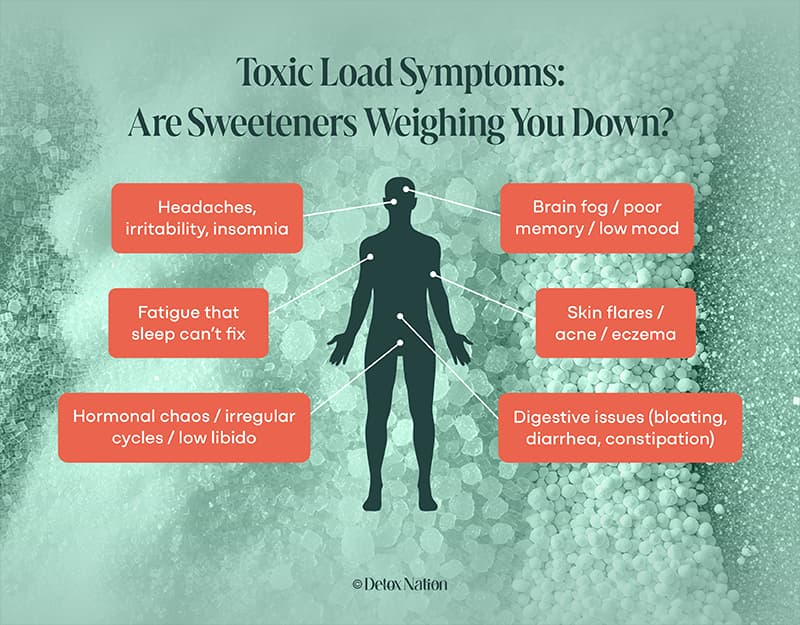
Toxic burden communicates through an unpredictable mix of symptoms that most doctors shrug off or chalk up to stress, hormones, or your “overactive imagination.”
Here’s what it can actually look like:
- Constant fatigue, no matter how much you rest
- Persistent brain fog and trouble concentrating
- Digestive issues like bloating, gas, constipation, or diarrhea
- Unexplained skin problems (rashes, breakouts, eczema)
- Mood swings or anxiety that feel out of proportion
- New sensitivities to foods, chemicals, or supplements
- Hormonal imbalances (irregular cycles, PMS, low libido)
- Poor sleep or waking consistently between 2-4 a.m.
Most people walking around with a high toxic burden don’t look sick.
They look functional.
Maybe a little “sensitive.”
But underneath, their bodies are working overtime to manage what they’ve accumulated—without much help from the outside world.
The medical system often doesn’t take these symptoms seriously until something catastrophic happens. Until then, you’re left doing your own research at 2 a.m., googling things like “why do I feel like garbage, but my labs are normal?”
You can look at your symptoms as, pointing toward what’s gunking up your system and slowing down your healing.
Toxic burden rarely shows up as a single “aha” moment. It shows up as the slow erosion of vitality. But the good news is, once you see it, you can start to do something about it.
You just need to learn how to lighten the load and support your body in doing what it was designed to do: heal.
How We Can Help
Guiding people to reclaim their health and vitality is our greatest joy. Our entire practice is dedicated to supporting you to be who you really are, at home in your body, because your body is able to heal itself.
Book a CallWhy This Matters Now More Than Ever
Your body wasn’t designed for this modern world.
It’s doing its best to keep up in an environment that’s radically different from anything our ancestors ever faced.
In the past 100 years, we’ve added over 85,000 synthetic chemicals to our environment—and only a tiny fraction of those have ever been tested for long-term human safety, especially in combination with each other.
According to the Environmental Working Group, the average American carries over 200 industrial chemicals in their body, and most of those are detectable before birth (25).
Let that sink in.
Your grandparents’ livers didn’t have to deal with flame retardants in the mattress, glyphosate on their salad, mold spores in their HVAC system, and neurotoxic sweeteners in their “healthy” protein bar.
And they definitely didn’t sign up for a 24/7 barrage of blue light, EMFs, microplastics, and a healthcare system that gaslights you for having the audacity to feel like trash.
You don’t get a flashing red light when you cross the threshold from “managing” to “overloaded.” Toxic burden builds quietly over time.
You start needing more coffee to get through the day.
You stop bouncing back after stress.
You pick up new food sensitivities, mood swings, or skin issues and chalk it up to aging or hormones.
You live small—cancel plans, say no to travel, numb out with screens—because your body just. Can’t. Handle. More input.
But here’s why this matters right now:
Toxic is a roadblock to being fully you.
Your vitality, creativity, joy, and sense of purpose are tied to your biochemistry.
You can’t separate your gut health from your mental clarity.
You can’t separate inflammation from your ability to be present in your relationships.
This is the lens that most practitioners are still missing.
You deserve better.
You deserve to wake up with energy.
You deserve to feel safe in your own body.
You deserve to thrive—not just manage.
Toxic burden is real. And it’s reversible.
Artificial sweeteners, often marketed as healthier alternatives, can contribute to this load, potentially interfering with metabolic processes and gut health.
By minimizing exposure to toxins and supporting your body’s detoxification pathways, you can lighten the load, and pave the way for genuine, sustainable health improvements.
Let’s start by taking an unfiltered look at artificial sweeteners.
Sugar Substitutes, Artificial Sweeteners, and Health
You’ve probably noticed: sweeteners are everywhere.
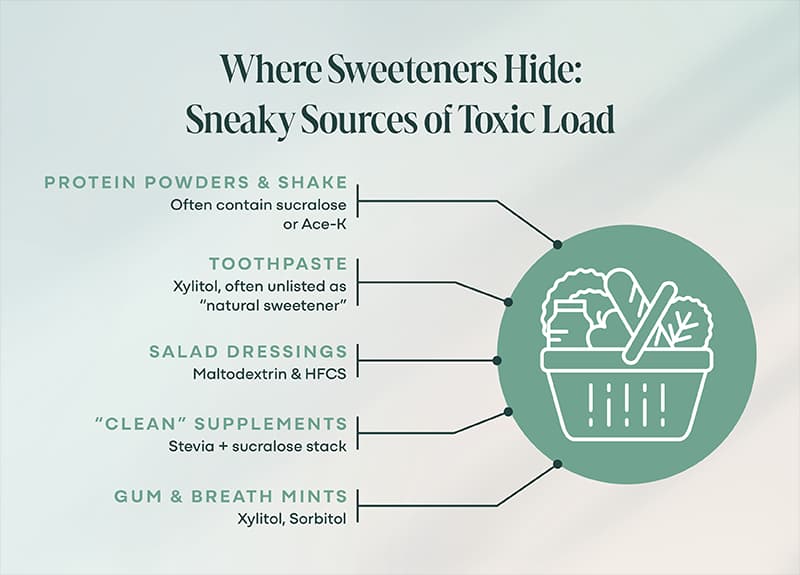
They sneak into your protein bars, gut health powders, dressings, and even “clean” supplements—all in the name of flavor without the calories.
Sounds harmless, right?
But most processed foods don’t just use one sweetener.
They stack them.
A little sucralose here, some erythritol there, maybe a touch of stevia to round it out.
And suddenly your “healthy” snack is more like a science experiment.
In this section, we’ll break down the most popular artificial and non-nutritive sweeteners—what they’re used for, how they behave in your body, and why they might be contributing more to your toxic burden than you think.

High-Fructose Corn Syrup
High-fructose corn syrup (HFCS) is a common sweetener found in many processed foods and drinks (especially apple juice), even in “healthy” yogurt.
It’s made from corn starch and contains both glucose and fructose, like table sugar.
Manufacturers often use HFCS because it’s cheaper than sugar but twice as sweet.
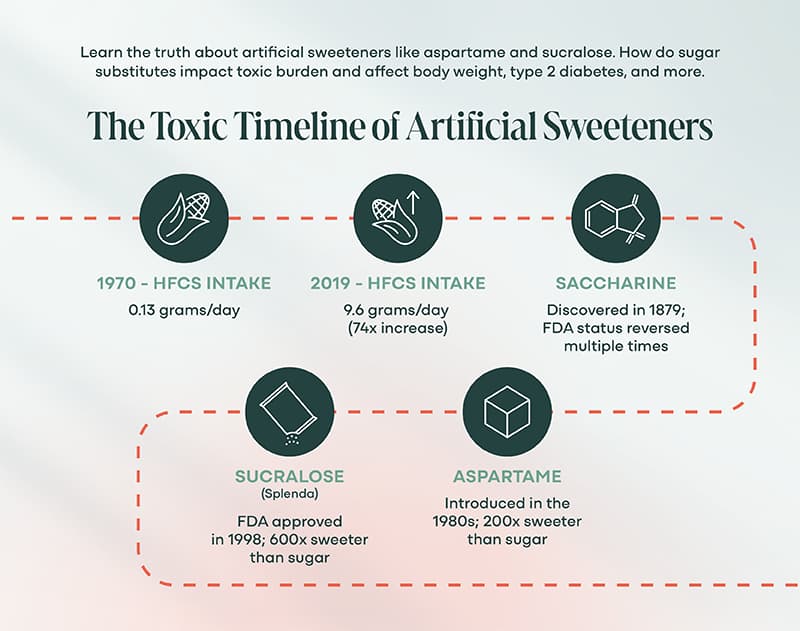
The average HFCS intake has increased from 0.13 grams per day in 1970, to a whopping 9.6 grams per day in 2019—an almost 74-fold increase (4)!
Most of our cells cannot directly use fructose. Instead, it must be processed by the liver, making more work for your busy liver.
The literature is clear: HFCS is devastating to your health in several ways. It:
- Increases inflammation, heart disease, metabolic syndrome, and diabetes (1).
- Severely impacts the gut-liver axis and causes dysbiosis (2).
- Decreases serotonin, increases anxiety, and impairs social interaction (3).
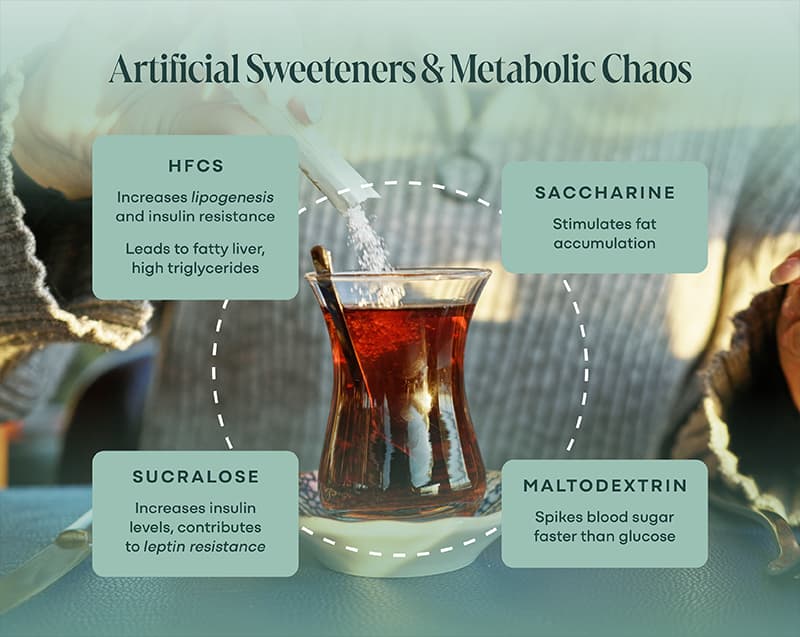
- Increases insulin resistance and lipogenesis – the creation of new fat cells (6).
- Contains purines so can increase the risk of gout.
- Causes liver inflammation, fatty liver, and dyslipidemia – think high cholesterol and high triglycerides (7).
- Changes sperm production, sperm motility, and testosterone (5).
- Leptin is a hormone that helps prevent hunger. HFCS causes leptin resistance, resulting in more hunger (18).
HFCS is cheap, sweet, and addictive—three words that don’t belong in your diet!
Once you start looking at labels, you’ll be astounded at how many items contain fructose, corn syrup, and/or high fructose corn syrup.
Saccharine
Saccharine is one of the oldest artificial sweeteners and is often found in products marketed as “sugar-free.”
You might know it as “the pink packet” or “Sweet’n Low.”
Saccharine is 300-400 times sweeter than table sugar, so only a tiny amount is needed to sweeten foods.
The FDA has changed its position on saccharine more than once, but you don’t need them to tell you saccharine is bad for you.
It’s been associated with diarrhea, hypoglycemia, kidney disease, bladder issues, various neoplasms, and weight gain (19).
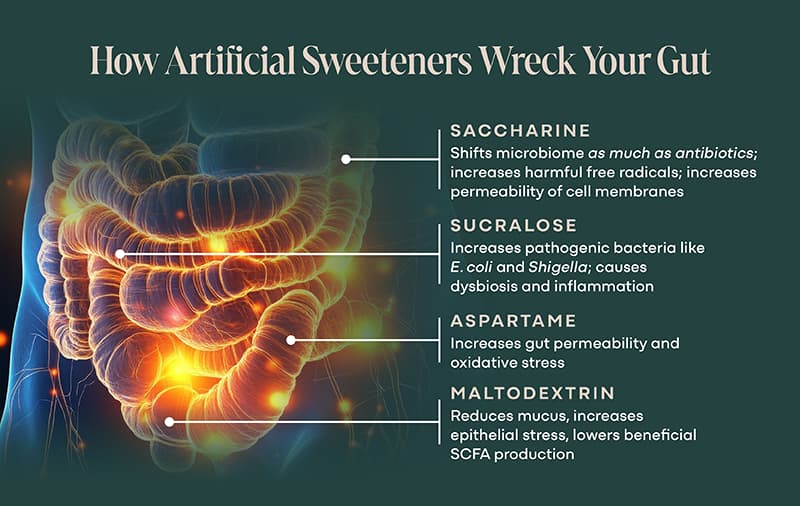
Saccharine can shift the gut microbiome as much as an antibiotic, increase harmful free radicals, and increase the permeability of cell membranes (8).
It can even stimulate fat accumulation and obesity—not the effect you want when choosing a “sugar-free” option (20).
Aspartame
Aspartame is a widely used low-calorie sweetener that you’ll find in many diet sodas and sugar-free products. It’s about 200 times sweeter than sugar, so it adds sweetness to food without adding extra calories.
Aspartame is found in the “blue packet” under the brand names of “Equal” or “NutraSweet.”
Like all artificial sweeteners, aspartame can cause dysbiosis and intestinal permeability, as well as an increase in free radicals (8, 9, 25).
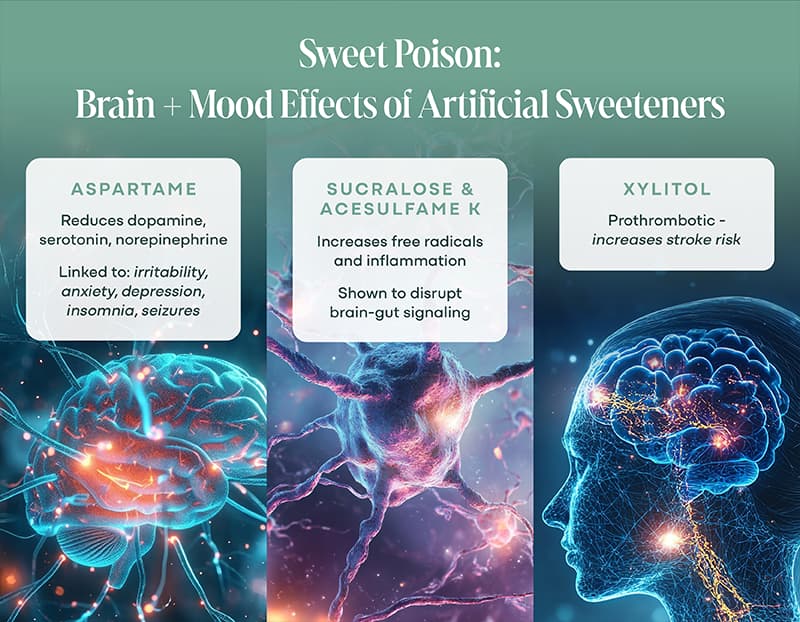
It also increases cortisol and decreases the synthesis and release of dopamine, serotonin, and norepinephrine (10).
Do you have a family member with Parkinson’s or a mood disorder? Get them off aspartame!
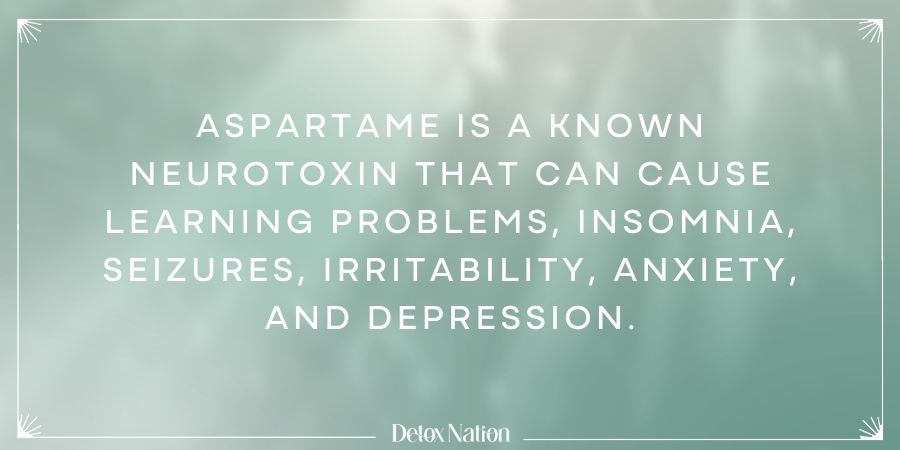
Aspartame is a known neurotoxin that can cause learning problems, insomnia, seizures, headaches, migraines, irritability, anxiety, and depression (10). It may even contribute to autism (11).
One of the easiest things you can do to promote brain health is to remove aspartame from your diet.

Sucralose and Gut Health
Sucralose is the most common low-calorie artificial sweetener (12), recognizable in the “yellow packet” under the brand name “Splenda.”
What makes it stand out is that it’s derived from sugar, which gives it a taste profile like sugar (but six hundred times sweeter) without the calories.
But it’s made by adding chlorine molecules to sugar. Would you dump a bunch of sugar in your pool and use that water to sweeten your coffee?
Of course not!
But they use great marketing companies to get you to use sucralose.
They certainly don’t want you to know that it causes dysbiosis (8, 24), microbiome shifts (8, 22), and an increase in pathogenic bacteria like E. coli and shigella (22).
Or that it creates inflammation, increases insulin levels, and cardiovascular changes (12).
In 2023, the World Health Organization issued a Global Health Alert about sucralose. They stated it can be found in the placenta and breast milk. It increases free radicals and liver inflammation and decreases your detox capacity (13).
Sucralose can be found in e-cigarettes and in many baked goods because it remains stable at high temperatures. But when heated, especially in stainless steel or with fats, it produces toxins (13).
Sucralose is cytotoxic (toxic to cells), genotoxic (toxic to genetic material such as DNA), and immunotoxic (toxic to your immune system) (13, 14).
Maltodextrin
Maltodextrin—this sneaky food additive is often hiding in your favorite processed foods, from protein bars to salad dressings.
It’s also known as dextrin, starch hydrolysates, corn syrup solids, modified corn starch, modified rice starch, modified tapioca starch, modified wheat starch, and resistant dextrin.
It’s a highly processed carbohydrate that spikes your blood sugar faster than table sugar. (Think of this as a blood sugar rollercoaster you didn’t ask to ride.)
I know we all want convenience sometimes (guilty!), but this little guy can disrupt gut health and contribute to insulin resistance.
Maltodextrin increases epithelial stress and inflammation in the gut, decreases mucus production in the gut, and decreases branched chain fatty acid production (22, 26).
Ditching maltodextrin is a simple, powerful way to support your body’s natural balance and stay in control of your energy.
Xylitol
Xylitol might sound like a sci-fi sweetener, but it’s actually a sugar alcohol found in everything from gum to baked goods.
Other names include wood sugar, birch sugar, birch bark extract, and xylite.
Sure, it’s low-calorie and doesn’t spike your blood sugar, but it’s not as harmless as it seems.
In fact, it can wreak havoc on your gut by acting as a sneaky disruptor of healthy bacteria.
Perhaps more concerning, xylitol is prothrombotic (meaning it promotes clot formation) and can increase your risk of cardiovascular issues such as stroke and heart attack (15).
Some people opt for toothpaste with xylitol as it can prevent cavities.
One last key piece of information: Xylitol is extremely toxic to pets. Even a small amount can quickly be fatal for your fur-baby. Before you give Fido a lick of peanut butter, double check to make sure it doesn’t contain xylitol!
Acesulfame Potassium
Acesulfame potassium sounds like it belongs in a chemistry lab—because, well, it does!
Its other names include Ace-K, Sunett®, Sweet One®, and acesulfame K.
This zero-calorie sweetener is often in your favorite “diet” drinks, protein powders, and sugar-free snacks, but your body doesn’t break it down.
That means it passes through your system unchanged, which raises a big red flag for your gut health (8, 16).
Ace-K decreases mucus production, increases the clumping of macrophages (a type of white blood cell), and increases free radical production (16).
I don’t know about you, but I’m not into being a guinea pig for science experiments when it comes to my health!
Let’s stick with real, whole foods to satisfy that sweet tooth without the chemical confusion.
Putting It All Together: Consuming Artificial Sweeteners Has Massive Health Consequences
This isn’t about never eating a cookie again.
It’s about choosing which cookie—and what baggage comes with it.
Understanding toxic burden doesn’t mean living in fear of every ingredient.
It means getting curious, asking better questions, and reclaiming the authority over what goes into (and onto) your body.
Artificial sweeteners may be legal, but that doesn’t make them safe.
They wreck your microbiome, spike inflammation, and overload your detox systems—and your gut is taking the hit.
I invite you to join our Rapid Gut Reset to start clearing the chemical clutter and rebuild your internal terrain.
The more you remove what’s clogging your system, the more space your body has to return to its natural state: clear, calm, and wildly capable of healing.
FAQs
1. What exactly is “toxic burden”?
Toxic burden is the total load of toxins your body’s carrying—both the ones you’re exposed to (like heavy metals, mold, plastics, and artificial sweeteners) and the ones your body makes internally as it processes stress and daily life. When your body can’t eliminate them efficiently, they build up and create a stagnant, inflamed terrain. That’s when symptoms start whispering—or shouting.
2. How do common artificial sweeteners add to my toxic burden?
Many artificial sweeteners are synthetic chemicals that disrupt your gut microbiome, increase inflammation, and stress your liver and nervous system. Some even cross the blood-brain barrier and interfere with neurotransmitter production. The short version? They’re not just “empty” calories—they’re toxic inputs your body must work overtime to handle.
3. Do I need to cut out all sweeteners forever?
Not necessarily. This isn’t about perfection—it’s about choosing what supports your body instead of stressing it. Some natural options like monk fruit, raw honey, or small amounts of maple syrup may be better tolerated. The key is to ditch the synthetic stuff that’s quietly wrecking your gut, liver, and mitochondria.
4. Where do I even start?
Start by noticing. Read ingredient labels. Question your “healthy” go-to’s. Take one of our free assessments to identify your biggest sources of toxic input. And most importantly, stay curious. Healing doesn’t happen in survival mode—it happens when you feel empowered and supported. You don’t need all the answers right now. Just the next step.
5. What are the effects of sweeteners, are they safe, and what concerns should you have about reducing sugar in your diet?
Many non-nutritive sweeteners have insidious and serious health effects. While reducing sugar intake and avoiding added sugar is great, consider some of the dangers linked to artificial sweetener intake: high blood pressure, risk of cancer, type 2 diabetes, increases in body weight, and other effects on health.